Omni 1.1 vs MiniMax H3 - Animating an Old PS2 Game Character
Same prompt and character through two AI video models, and only one kept the old game look
 Tested by Nouamane Benbrahim
Disclaimer: This is an independent creative test made with AI, for demonstration only. It isn't an ad for any brand shown or named, and isn't affiliated with, sponsored or endorsed by them. All trademarks belong to their owners
I'm taking old PS2 game characters and dropping them into situations they were never in. This time I grabbed CJ from San Andreas and tried to make him actually play a game of lacrosse.
I put him on a grass field with a stick, then wrote one 10 second clip cut into four scenes. Then I ran that exact same clip and the exact same image of CJ through two different AI video models, both at their lowest resolution, to see which one still looked like the game.
Here's my exact process.
1. Build the character reference
First I make one image of CJ to use as the reference. I took a single image of him and said "put him on a sunny grass field, holding a lacrosse stick with the ball sitting in the net, same old San Andreas look." Both models lock onto this image to keep CJ looking like himself while they build their own shots around him. This is reference mode: the models read the image for who CJ is and compose everything else themselves.
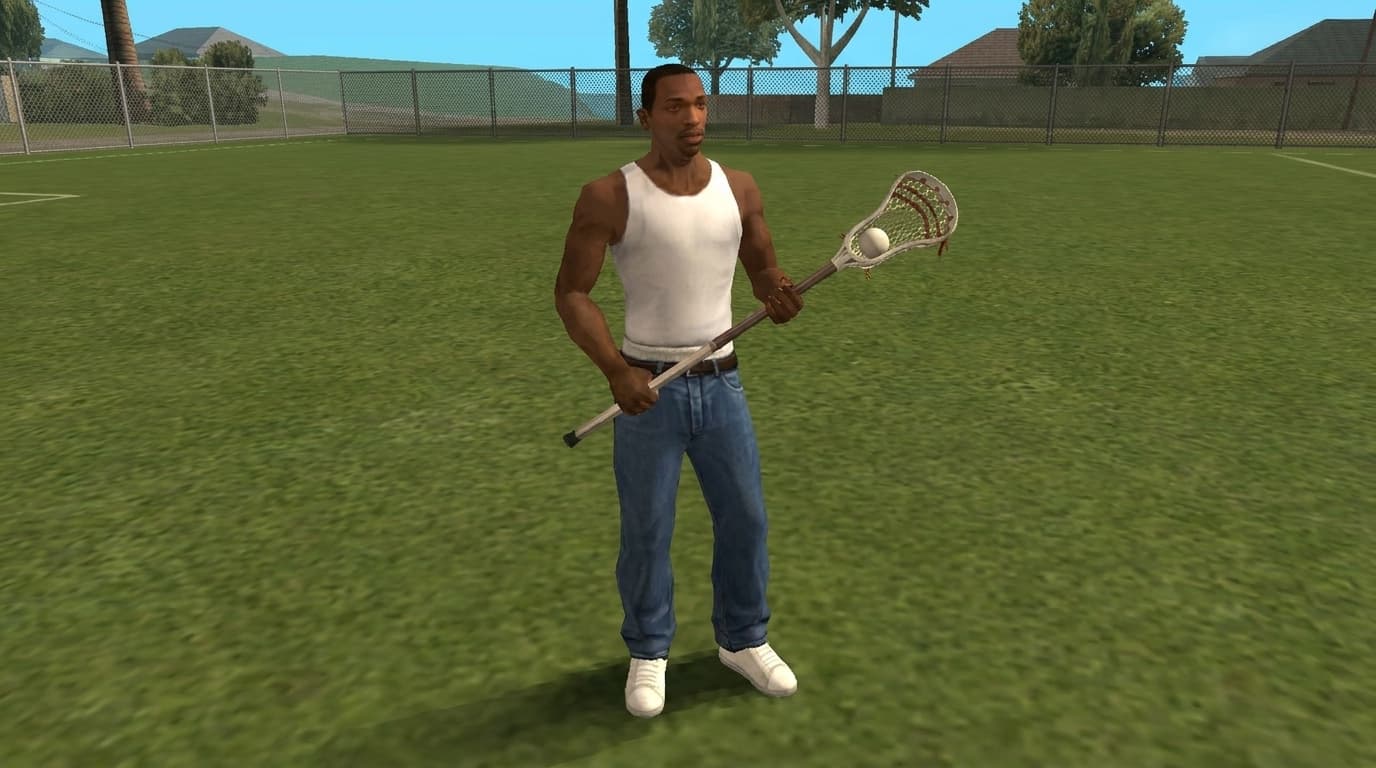
Exact prompt
A native in-engine frame from an early-2000s open-world 3D video game, captured in that same low-polygon, slightly soft-textured console-render style from the start — not a composite, not a photo, not a 2D paste-in: the character is modelled and lit inside this grass-field scene so he belongs to it. Preserve the muscular Black male character — shaved head, white ribbed tank top, blue denim jeans, white sneakers, in the exact blocky early-2000s game-render style — from the first reference. Do NOT source his face, build or outfit from anything else, and do NOT copy any overlaid watermark, handle or "subscribe" text from the reference. THE VIBE: Relaxed, sunny, open-air sports-field energy in the unmistakable early-2000s open-world game look — flat-ish real-time shading, low-detail textures, that nostalgic PS2-era render feel. One guy standing on a green field, a lacrosse stick in hand, the ball sitting in the net. Casual and grounded, an in-game moment, not a staged hero shot. IDENTITY LOCK: The muscular Black male character is preserved exactly from the first reference — same shaved head, same facial model, same white ribbed tank top, blue denim jeans and white sneakers, rendered in the same early-2000s 3D game style. He is relit entirely by this scene's daylight; the reference's lighting is discarded. Do NOT alter or re-itemise his face beyond the reference. THE SUBJECT / THE CHARACTERS: The character stands on the grass, weight settled on his back leg in a relaxed natural stance, body turned slightly off-axis from the camera. Both hands grip a lacrosse stick (a crosse): his lower hand near the base of the shaft, his upper hand midway up, holding the stick diagonally upright across the front of his body with the head raised toward his upper left. A single white lacrosse ball rests settled inside the mesh pocket (the net) of the stick's head — cradled in the net, not on the ground. Calm, lightly focused expression, gaze sent just off-camera across the field. One clear held pose, settled — not mid-swing, not mid-stride. THE FACE: Rendered in the same low-poly early-2000s game style as the reference — a simple, slightly soft facial model with matte game-engine shading. No photoreal skin texture, no plastic gloss, no added pores. Face and deep skin tone match the reference exactly, its warm undertone kept consistent with the render and lit by the scene's daylight. THE SETTING: A wide, flat green grass sports field under an open bright sky, grass rendered with that era's low-detail repeating texture. A simple secondary backdrop far behind — a low chain-link fence, a few sparse trees and faint suburban rooftops, all in the same low-detail early-2000s style, kept soft so the character reads first. THE LIGHT: KEY: broad afternoon sunlight from high and slightly camera-left, fairly soft in the game-render style, landing evenly across the character, about one stop over the field so he stands out. FIELD: grass and sky sit bright and even, the flat daytime lighting typical of the era, no deep shadows. Colour grade: warm, sunny, lightly saturated greens and blues like a clear-day open-world scene. A real soft cast shadow pools under his feet on the grass so he is planted in the scene, not floating. THE KEY DETAILS: The lacrosse stick is clearly a lacrosse crosse — a straight shaft with a triangular head and a woven mesh/net pocket at the top; the white ball unmistakably sitting IN that net pocket. Grass blades underfoot, a faint painted field line or two optional in the distance. THE MOOD: Easygoing, sunny, nostalgic early-2000s game-world vibe — a character paused on the field mid-game, relaxed and in control. THE COMPOSITION: Wide horizontal framing. The character stands a touch off-centre, full-body, occupying the central vertical third of the frame, with open green field extending to either side and bright sky above. Feet planted with grass below them, comfortable headroom, the raised head of the lacrosse stick well inside the frame. Field and sky fill the rest. His head sits in the upper third of the frame. THE CAMERA: Rendered like an in-game third-person screenshot — a straight, eye-level to slightly-low game-camera view, standard field of view, the slightly soft lower-resolution console-render look of the era. Not cinematic, not DSLR. THE AFTER EFFECT: The whole frame carries the early-2000s 3D console-game rendering — low-polygon models, low-detail textures, flat real-time shading, mild aliasing — a native game screenshot look, applied evenly across character and scene so nothing reads pasted in. No overlay text, no watermark, no UI elements.
One thing was off right away. The headroom came out tight, his head almost touching the top of the frame. I'd pull the camera back a bit next time, but it was fine to work from.
2. Write one clip, cut into four scenes
I keep CJ locked to that one image so he stays himself the whole way, and I write the pacing in words instead of timestamps.
3. Run it on Omni
Exact prompt
Create a new video — a fast, cinematic early-2000s console-game highlight reel where a muscular Black male lacrosse player dominates a game on a sunny grass field, across four hard-cut action beats: he scoops and breaks away, jukes a defender, bulls through contact, then rips the game-winning goal and celebrates. Everything is non-photoreal early-2000s open-world game rendering: low-polygon models, low-detail textures, flat real-time shading, mild aliasing. One continuous world — the same sunny grass lacrosse field, chain-link fence, sparse trees and faint suburban rooftops behind, bright afternoon sun from high and slightly camera-left, warm lightly-saturated colour grade, the player always attacking left to right. The character <IMAGE_REF_0> is that player — shaved head, white ribbed tank top, blue denim jeans, white sneakers; preserve him exactly and keep the game-render look; he is relit by this field's sunlight, take nothing else from the reference's background. Four roughly equal beats joined by hard cuts, high energy; the last beat holds a touch longer as the hero frame. [SCENE 1] Breakaway scoop & sprint. The player low over the grass, his stick dipping to scoop a white ball up into the mesh pocket, then snapping upright into a hard sprint from left to right; the camera tracks low and fast alongside him at hip height, grass and chain-link fence streaking past in soft motion blur. A quick, driving shot. [SCENE 2] The juke. Hard cut to the player planting hard and cutting past a lunging defender who grabs at empty air; a brief speed-ramp on the plant, the camera whipping to stay with him as he accelerates away cradling the stick. Tight, then widening. [SCENE 3] Power drive through contact. Hard cut to a low, heroic tracking push-in as the player lowers his shoulder and bulls straight through a defender toward the goal, turf kicking up, the defender bouncing off. The biggest, most dominant shot. [SCENE 4] The finish. Hard cut to the player winding up and ripping a shot — the white ball rockets into the back of the net past a diving keeper — then he wheels away, stick raised, triumphant. The camera settles into a mostly-still low hero frame, him large and centred with clean space around him. Held a beat longer than the others. True colours under the sunlight: white tank, blue denim, green field, white ball. The player's identity and outfit from <IMAGE_REF_0> stay unchanged across all four beats. Non-photoreal console-game rendering throughout. No extra fingers or warped limbs, no on-screen text, no watermark, no UI, no logos.
I ran it through Omni first. It animated the whole thing, and here's what I didn't ask for: it added other players on its own. Defenders stepping in, a keeper at the goal, even a tackle or two. I never put a single one of them in the image.
It also came out brighter and more realistic, closer to a modern remaster than the San Andreas I started with.
4. Run the exact same thing on H3
Exact prompt
Create a new video — a fast, cinematic early-2000s console-game highlight reel where a muscular Black male lacrosse player dominates a game on a sunny grass field, across four hard-cut action beats: he scoops and breaks away, jukes a defender, bulls through contact, then rips the game-winning goal and celebrates. Everything is non-photoreal early-2000s open-world game rendering: low-polygon models, low-detail textures, flat real-time shading, mild aliasing. One continuous world — the same sunny grass lacrosse field, chain-link fence, sparse trees and faint suburban rooftops behind, bright afternoon sun from high and slightly camera-left, warm lightly-saturated colour grade, the player always attacking left to right. The character in reference image 1 is that player — shaved head, white ribbed tank top, blue denim jeans, white sneakers; preserve him exactly and keep the game-render look; he is relit by this field's sunlight, take nothing else from the reference's background. Four roughly equal beats joined by hard cuts, high energy; the last beat holds a touch longer as the hero frame. [SCENE 1] Breakaway scoop & sprint. The player low over the grass, his stick dipping to scoop a white ball up into the mesh pocket, then snapping upright into a hard sprint from left to right; the camera tracks low and fast alongside him at hip height, grass and chain-link fence streaking past in soft motion blur. A quick, driving shot. [SCENE 2] The juke. Hard cut to the player planting hard and cutting past a lunging defender who grabs at empty air; a brief speed-ramp on the plant, the camera whipping to stay with him as he accelerates away cradling the stick. Tight, then widening. [SCENE 3] Power drive through contact. Hard cut to a low, heroic tracking push-in as the player lowers his shoulder and bulls straight through a defender toward the goal, turf kicking up, the defender bouncing off. The biggest, most dominant shot. [SCENE 4] The finish. Hard cut to the player winding up and ripping a shot — the white ball rockets into the back of the net past a diving keeper — then he wheels away, stick raised, triumphant. The camera settles into a mostly-still low hero frame, him large and centred with clean space around him. Held a beat longer than the others. True colours under the sunlight: white tank, blue denim, green field, white ball. The player's identity and outfit from reference image 1 stay unchanged across all four beats. Non-photoreal console-game rendering throughout. No extra fingers or warped limbs, no on-screen text, no watermark, no UI, no logos.
Then I ran the exact same clip and the same image of CJ through H3. It filled the field with players too, defenders and a keeper, same as Omni.
This one stayed in San Andreas the whole way though. The low poly models, the flat daylight, all of it held, so this was the one I kept.
One thing to keep in mind: I ran Omni at 360p and H3 at 768p, both their lowest. They come out at different sizes, so the two clips don't match up exactly.
Why it works
Running the exact same clip and the same image of CJ through two models is how I could tell what was me and what was the model. The prompt never changed, so the only thing that could explain the gap, one modern and one true to the old game, was the model itself.
Both of them built a whole scene out of one still, which honestly still gets me.
Your turn: take one game character you like, make one reference image of him, and run the same clip through two models to see which one keeps the look you want. That's step one.
And if you'd rather not rebuild the character every time, Emero writes these prompts for you and remembers CJ so he stays the same across every clip, at cost.

Get one of these every day
I test new workflows daily and send them with the exact prompts, the models and the costs
5,920 generations tested so far
More workflows
See all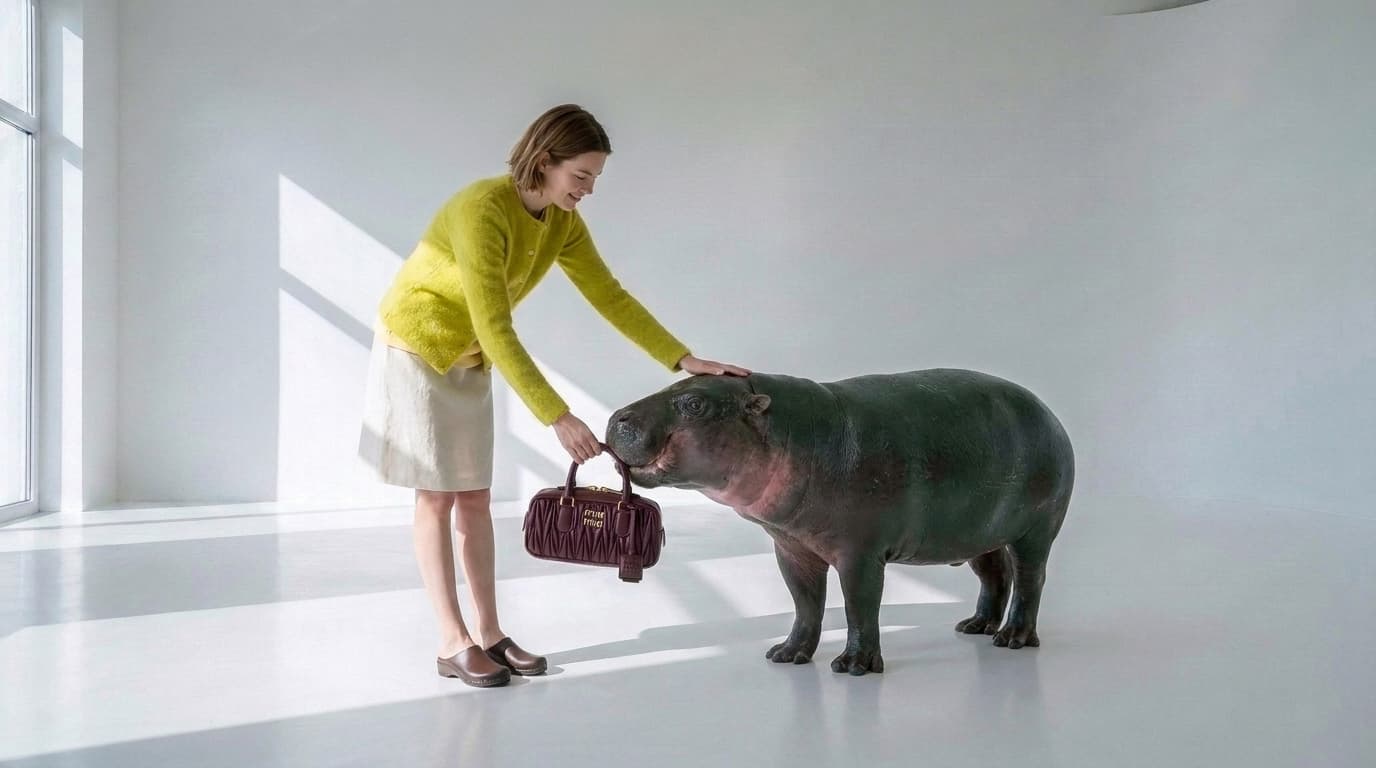
Nano Banana Pro + Kling 4.0 - a pygmy hippo brings the bag, outfit from one product photo
A real pygmy hippo brings a burgundy quilted bag, with the outfit taken from one on-model photo
Nano Banana Pro, Kling 4.0 · 11 min render
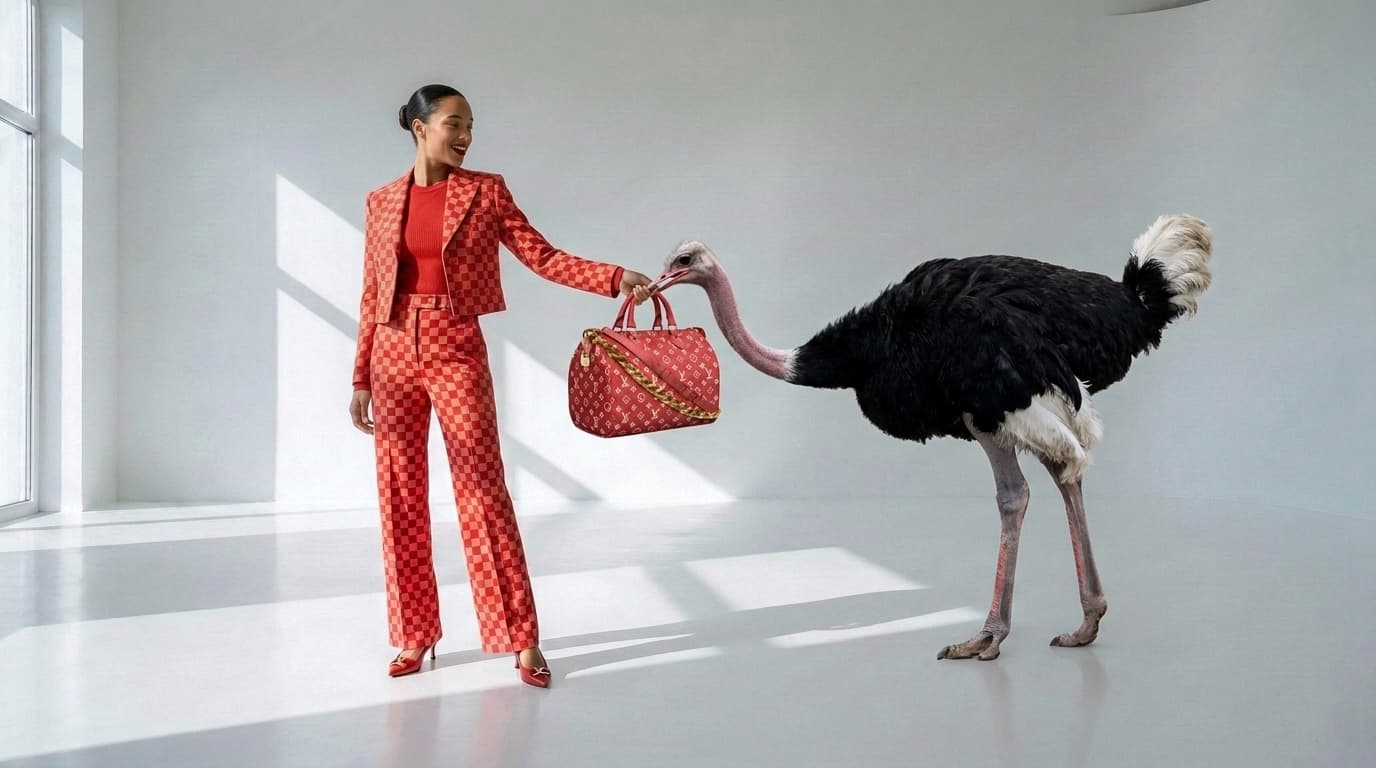
Nano Banana Pro + Kling 3.0 - an ostrich delivers a red barrel bag
An ostrich hands over a recoloured monogram bag, built from one product sheet
Nano Banana Pro, Kling 3.0 · 14 min render

Seedance 2.5 vs MiniMax H3 - jewelry ad from two photos
Lock the set and the product as images first, then animate. Same references on two video models
Nano Banana 2.1, Seedance 2.5, MiniMax H3 · 8 min render