Disclaimer: This is an independent creative test made with AI, for demonstration only. It isn't an ad for any brand shown or named, and isn't affiliated with, sponsored or endorsed by them. All trademarks belong to their owners
GPT Image 2.5 Flare - fake slogans on billboards, subway posters and mall screens
Put short slogans on billboards, subway posters, mall screens and shop windows
 Tested by Nouamane Benbrahim
What happens when you put a joke where the ads usually go?
After rebuilding a viral anti-ad sign, I wrote a few sale-speak jokes of my own and tried them on the ad spots you walk past every day: a highway billboard, a subway poster, a mall screen and a shop window. Every slogan is made up and none of these ads exist.
Here's how I did it.
1. Pick the spot that makes the joke work
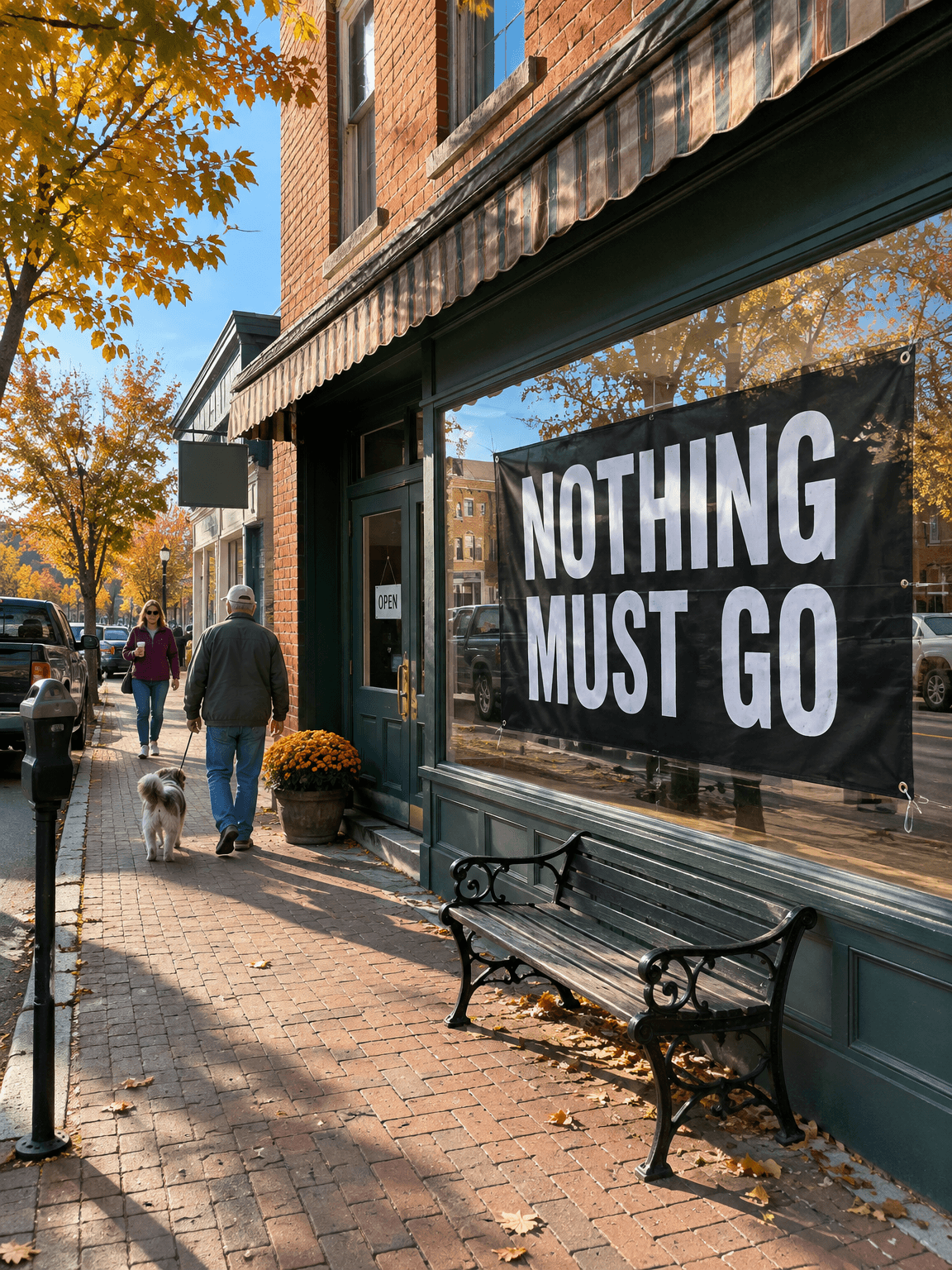
The place does half the work. "NOTHING MUST GO" went in the window of a small-town shop, right where you'd normally see a clearance banner. I added a man walking his dog past it without looking up.
Exact prompt
Create a new photorealistic image of a small-town American Main Street storefront with a huge sale banner across its window on a bright autumn afternoon. THE VIBE: The classic going-out-of-business storefront — the kind plastered with "everything must go" clearance signs — instead hangs a blunt, deadpan banner that flips the phrase. A quiet sidewalk, a couple of passers-by, nobody stopping. Witty, quietly subversive guerrilla sign-takeover captured as a casual phone snapshot. THE SUBJECT: A wide vinyl banner hung across the inside of a large storefront plate-glass window, filling most of the glass, the right two-thirds of the frame. The banner is solid matte black with bold white condensed hand-painted-style capital letters, centred on two lines, the exact text: "NOTHING" / "MUST GO". Letters huge, slightly imperfect like a screen-print, correctly spelled and fully legible. The banner is fixed with visible grommets and zip ties at its corners, sagging very slightly in the middle. The glass in front of it carries soft reflections of the sky, the street trees and the building across the road. Nothing else on the banner — no logo, no URL, no brand names. THE SETTING: A two-storey red-brick Main Street building with a dark green painted wooden storefront, a recessed entrance door with a brass handle and a small blank "OPEN" card, a faded striped canvas awning above the window, a brick sidewalk with a cast-iron bench, a planter with orange mums, and a parking meter at the curb. Neighbouring storefronts on either side with generic abstract signage — no real brand names. Street trees with yellow and orange leaves, a few leaves on the sidewalk. A pickup truck and a sedan parked at the curb. THE CROWD: Two or three people only — an older man walking a small dog past the window, a woman in a fleece jacket carrying a coffee further down the sidewalk. Unposed, candid, not looking at the banner. THE FACE: Natural skin texture, no airbrushing, no plastic or waxy skin, subtle tonal variation. THE LIGHT: Late-afternoon autumn sun from the left raking across the brick facade, warm on the bricks and awning, the awning casting a soft shadow band across the top of the window. Reflections on the glass are bright where the sky hits. Unified light across the building, people and sidewalk; the man and dog cast shadows on the bricks. THE KEY DETAILS: The banner is the sharp hero; its text is the punchline. The small-town shop setting sells the clearance-sale reference. THE MOOD: Everyday small-town American realism, warm natural colour grade, mild contrast. THE COMPOSITION: Portrait frame shot from the edge of the sidewalk at standing eye level, angled slightly down the street. The storefront window with the banner fills the right two-thirds from about one-quarter down to two-thirds down, large and readable; the sidewalk, bench, passers-by and the street receding into the distance on the left; the awning and upper brick facade at top. THE CAMERA: Shot on an iPhone at standing eye level, deep focus, everything sharp, NO background blur; casual social-media snapshot.
2. Write for the surface
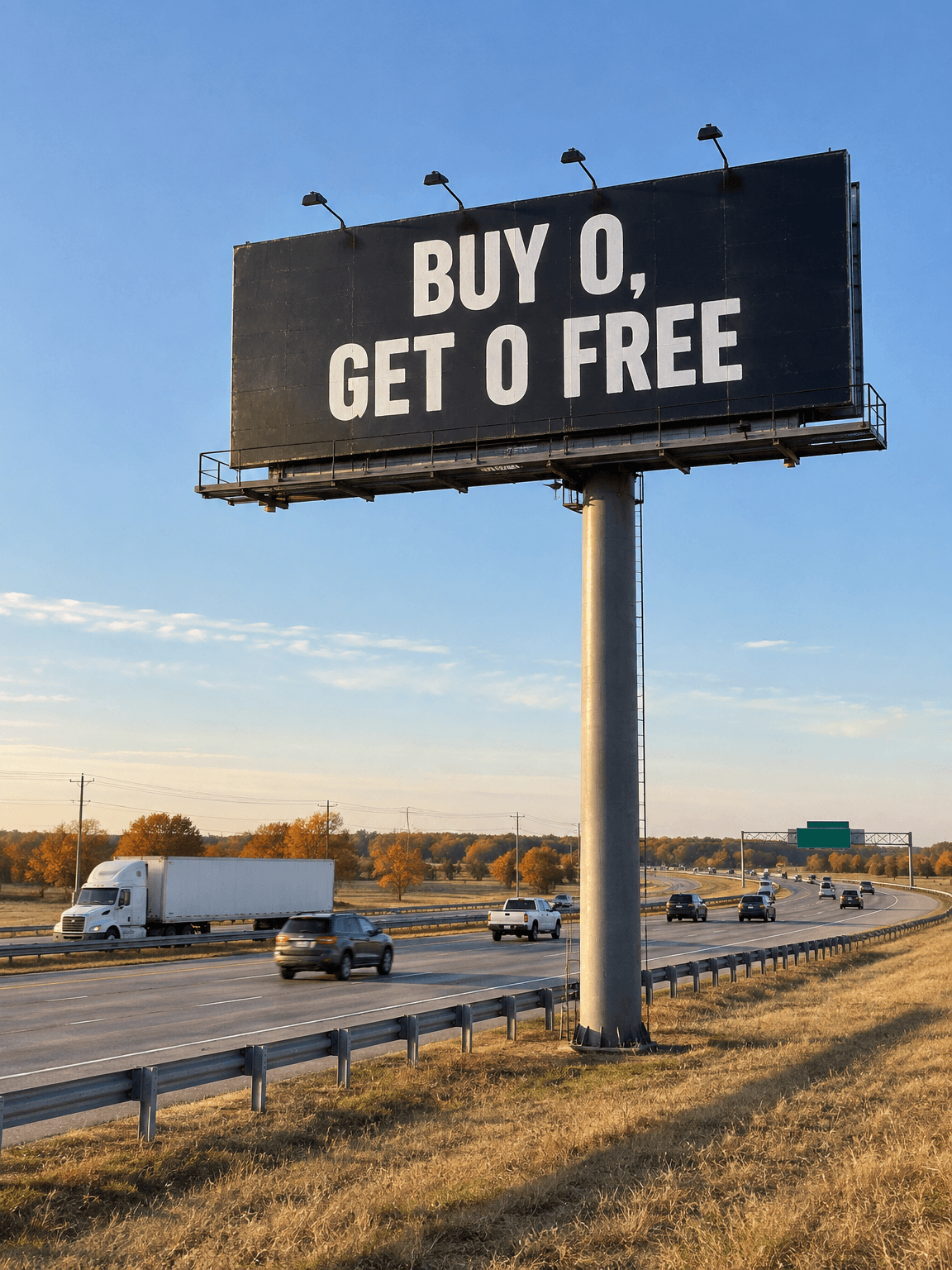
A highway billboard gets read at 70 mph, so I kept it to two short lines: "BUY 0," / "GET 0 FREE".
Then I described the billboard itself like I was ordering one: a single steel pole, a metal walkway along the bottom, four little spot lamps on arms, black vinyl with faint seams. For the shop window I asked for grommets and zip ties at the corners and a slight sag in the middle. Those boring details are what make it look like something someone actually paid to put up.
Exact prompt
Create a new photorealistic image of a giant roadside billboard beside an American interstate highway on a clear late-afternoon in autumn. THE VIBE: The most American advertising surface there is — a towering highway billboard that normally shouts about lawyers, fast food and car deals — instead carries a blunt, deadpan joke written in perfect sale-speak. Cars stream past at speed, nobody stops. Witty, quietly subversive guerrilla ad-takeover captured as a casual phone snapshot. THE SUBJECT: A standard large highway billboard (the wide rectangular bulletin format, roughly three times wider than tall) mounted high on a single thick grey steel monopole, with a metal catwalk railing along its bottom edge and four small downward spot lamps on arms above the walkway. The billboard face is solid matte black vinyl, slightly weathered with faint panel seams, and carries bold white condensed hand-painted-style capital letters, centred on two lines, the exact text: "BUY 0," / "GET 0 FREE". Letters huge, slightly imperfect like a screen-print, correctly spelled and fully legible. Nothing else on the board — no logo, no phone number, no URL, no brand names. THE SETTING: A wide multi-lane interstate highway curving gently into the distance, grey concrete lanes with white dashed lines, a steel guardrail and a grassy shoulder of dry tan grass in the foreground. Flat Midwestern farmland and a low tree line with orange and yellow autumn foliage behind. A green overhead highway sign far in the distance with blank, illegible text. Power lines along the road. THE TRAFFIC: Moderate traffic in both directions — a white semi-truck with a plain unmarked trailer, an SUV, a pickup truck, a few sedans — some motion-softened from speed, generic with no visible logos. THE LIGHT: Low golden late-afternoon sun from the left, warm light raking across the billboard face and pole, long shadows from the pole and guardrail across the grass, a clear pale-blue sky with a few thin streaks of cloud near the horizon. The billboard's matte black face catches only a faint warm sheen; the pole casts a real shadow on the ground. THE KEY DETAILS: The billboard is the sharp hero; its two-line text is the punchline. The scale of the board against the tiny cars sells the size. THE MOOD: Everyday American road-trip realism, warm natural colour grade, mild contrast. THE COMPOSITION: Portrait frame, shot from the grassy shoulder looking slightly up. The billboard sits in the upper half, slightly right of centre, large and angled a little toward camera, its full face visible with clear sky around it; the monopole drops down through the frame to the ground. The highway with traffic runs across the lower third, the guardrail and grass in the foreground. THE CAMERA: Shot on an iPhone at standing eye level, deep focus, everything sharp, NO background blur; casual social-media snapshot.
3. Make the numbers read as numbers
This one burned me. On that first billboard the zeros came out narrow and round enough to pass for the letter O, and then the joke doesn't land.
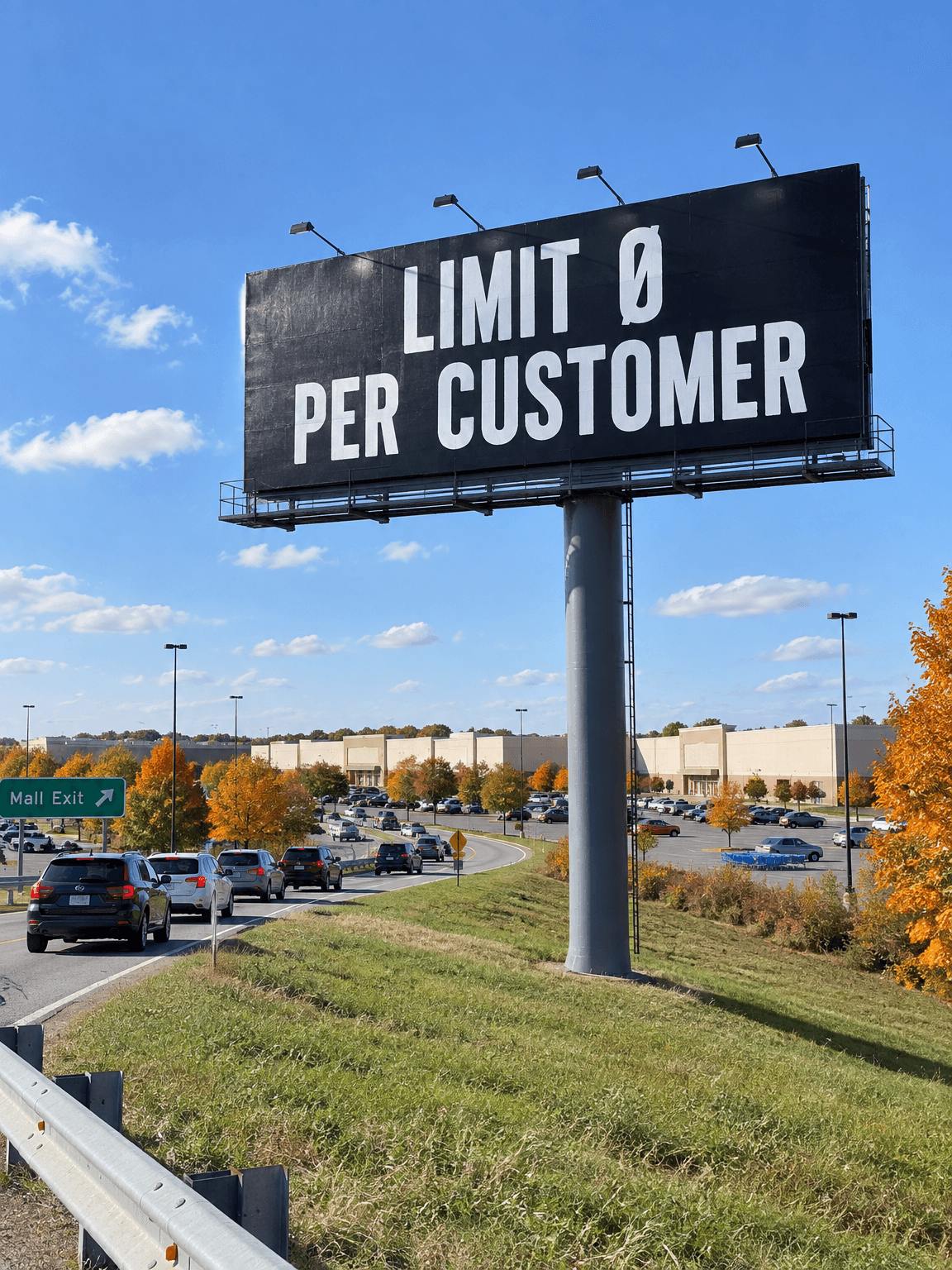
So on the next billboard I described the zero itself: a narrow upright oval with a diagonal slash through it, clearly a digit. The slash came through, and I kept it on every version after.
Exact prompt
Create a new photorealistic image of a giant roadside billboard beside an American suburban highway next to a big-box shopping plaza on a bright autumn afternoon. THE VIBE: Right where everyone pulls off to shop, a towering billboard borrows the fine print of every doorbuster sale and turns it into a deadpan joke. Traffic crawls toward the mall exit, nobody notices. Witty, quietly subversive guerrilla ad-takeover captured as a casual phone snapshot. THE SUBJECT: A large wide-format highway billboard (roughly three times wider than tall) on a tall grey steel monopole with a metal catwalk railing along its bottom edge and four small spot lamps on arms above. The face is solid matte black vinyl with faint panel seams, carrying bold white condensed hand-painted-style capital letters, centred on two lines, the exact text: "LIMIT 0" / "PER CUSTOMER". The "0" is clearly the numeral zero — a narrow upright oval with a diagonal slash through it, unmistakably a digit, not the letter O. Letters huge, slightly imperfect like a screen-print, correctly spelled and fully legible. Nothing else on the board — no logo, no phone number, no URL, no brand names. THE SETTING: A multi-lane suburban highway with an off-ramp; beyond it a sprawling big-box shopping plaza with a huge half-full parking lot, long beige store facades with blank generic signage (no real brand names), light poles, a few shopping carts. Trees with orange autumn foliage on a berm. Grassy shoulder and a guardrail in the foreground. THE TRAFFIC: Moderate traffic, a line of generic cars and SUVs on the off-ramp heading to the plaza, no visible logos. THE LIGHT: Bright mid-afternoon autumn sun from the left, crisp shadows, a blue sky with a few white puffy clouds. The billboard's matte black face catches a faint sheen; the pole casts a real shadow across the grass. THE KEY DETAILS: The billboard is the sharp hero; its text is the punchline, the shopping plaza below sells the irony. THE MOOD: Everyday American suburban realism, natural colour grade, mild contrast. THE COMPOSITION: Portrait frame shot from the grassy shoulder looking slightly up. The billboard sits in the upper half, slightly right of centre, large and angled a little toward camera, its full face visible with sky around it; the pole drops to the ground. Highway, off-ramp and shopping plaza across the lower third. THE CAMERA: Shot on an iPhone at standing eye level, deep focus, everything sharp, NO background blur; casual social-media snapshot.
4. Put someone in the shot who ignores it
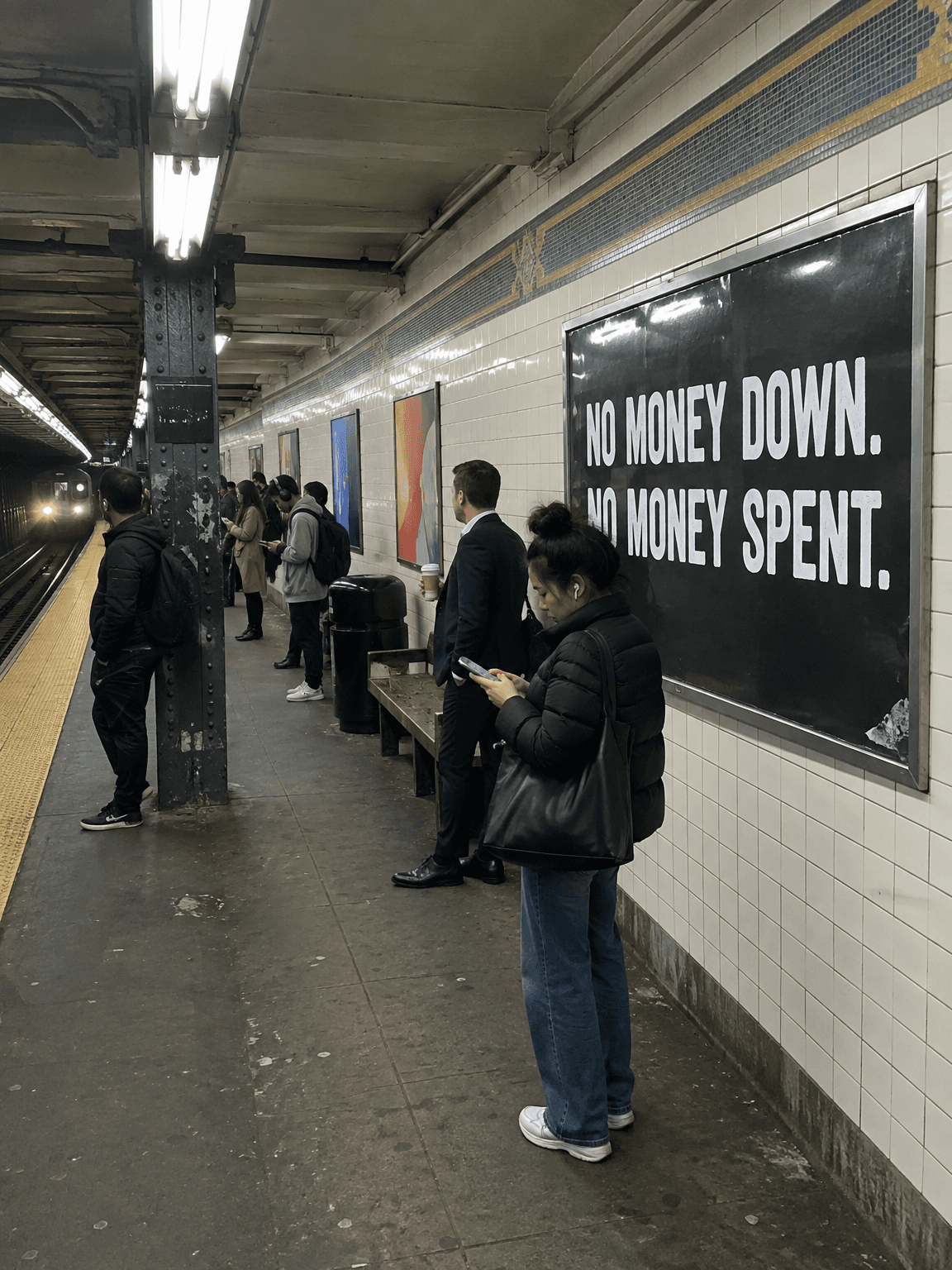
On the subway poster I asked for a woman scrolling her phone right underneath it, with the rest of the commuters looking at their phones or down the tunnel. It's funnier when nobody notices.
Exact prompt
Create a new photorealistic image of a large advertising poster on a New York-style subway platform wall during the evening commute. THE VIBE: The most ad-saturated place in the city — a subway platform lined with posters selling loans, mattresses and apps — and one big poster that uses the exact language of a finance ad to deliver a blunt, deadpan joke. Commuters wait and scroll, nobody looks up. Witty, quietly subversive guerrilla ad-takeover captured as a casual phone snapshot. THE SUBJECT: A large horizontal subway platform poster in a slim brushed-steel frame behind scuffed clear plastic, mounted on the tiled wall on the right side of the frame, about 1.5 m tall and 3 m wide. The poster is solid matte black with bold white condensed hand-painted-style capital letters, centred on two lines, the exact text: "NO MONEY DOWN." / "NO MONEY SPENT." Letters huge, slightly imperfect like a screen-print, correctly spelled and fully legible. A faint reflection of the overhead lights on the plastic cover; a small torn corner of an older poster peeking out at one edge. Nothing else on the poster — no logo, no URL, no brand names. THE SETTING: An underground subway platform with off-white ceramic subway tiles, a band of coloured mosaic trim along the wall, steel I-beam columns painted dark green with chipped paint, a yellow tactile safety strip at the platform edge, worn grey concrete floor with old gum spots, a wooden bench, a trash can. Other generic poster frames further down the wall showing blank colourful abstract ads with no readable text. The dark track bed on the left, a train's headlights approaching from the tunnel in the distance. Station signage is blank or illegible — no real line numbers, no transit logos. THE CROWD: Eight to twelve commuters in autumn coats spread along the platform — a woman in a puffer jacket scrolling her phone directly beneath the poster, a man in a suit holding a coffee, a student with a backpack and headphones, a worker leaning on a column. Unposed, candid, faces mostly turned to phones or the tunnel. THE FACE: Natural skin texture, no airbrushing, no plastic or waxy skin, subtle tonal variation. THE LIGHT: Flat greenish-white overhead fluorescent tube light along the ceiling as THE KEY source, slightly uneven with brighter pools under each fixture and dimmer stretches between; a warm glow of the approaching train's headlights in the tunnel. Commuters lit from above with soft shadows under their brows and on the floor; the poster's plastic cover catches the fluorescent reflections. THE KEY DETAILS: The poster is the sharp hero; its text is the punchline. The woman scrolling under it, oblivious, sells the joke. THE MOOD: Gritty everyday city realism, slightly cool fluorescent green-tinted grade, mild contrast. THE COMPOSITION: Portrait frame shot from the platform at eye level, looking down the platform at a gentle angle. The poster fills the right side from about one-third down to two-thirds down, large and readable, angled slightly toward camera; the platform, columns and commuters recede to a vanishing point on the left, the track bed along the far left edge. THE CAMERA: Shot on an iPhone at standing eye level, deep focus, everything sharp, NO background blur; casual social-media snapshot.
One honest note: her hair bun ended up covering part of the N in the second line. It still reads, but I'd redo it before a big post.
5. Clear people out with one edit
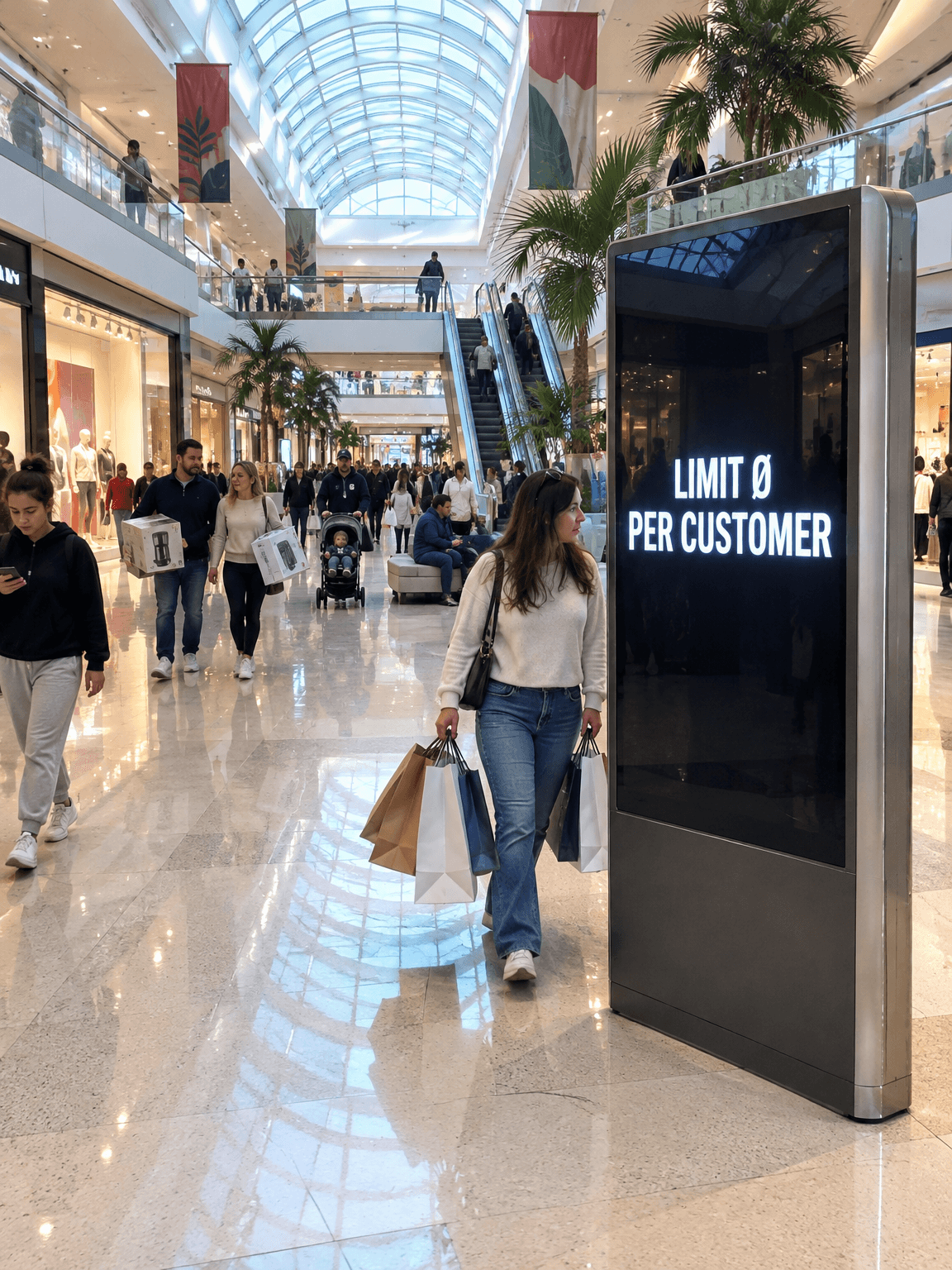
On the mall screen I went the other way. The first version had a woman with shopping bags walking right past the screen and a couple carrying boxed appliances on the left that looked kind of off.
Exact prompt
Create a new photorealistic image of a tall freestanding digital ad kiosk in the middle of a busy American shopping mall concourse on a weekend afternoon. THE VIBE: Peak shopping — a bright mall concourse full of people carrying bags — and right in the middle of the walkway, a glowing digital ad screen that borrows doorbuster fine print to deliver a blunt, deadpan joke. Shoppers stream past without a glance. Witty, quietly subversive guerrilla ad-takeover captured as a casual phone snapshot. THE SUBJECT: A tall double-sided digital advertising kiosk on the right side of the frame, about 2.2 m tall and 1 m wide, a slim brushed-aluminium and dark-grey totem housing with rounded edges and a portrait LED screen filling most of its face. The screen shows a solid black background with bold white condensed capital letters, centred on two lines, the exact text: "LIMIT Ø" / "PER CUSTOMER". The "Ø" is clearly the numeral zero with a diagonal slash through it, unmistakably a digit. Letters large, crisp, correctly spelled and fully legible. The screen glows slightly brighter than its surroundings, a faint reflection of the skylights on its glass. Nothing else on the screen — no logo, no URL, no brand names; no branding on the kiosk housing. THE SETTING: A two-level enclosed mall concourse: glossy cream terrazzo floor reflecting the light, a glass-railed upper walkway with escalators crossing in the background, a long barrel-vaulted skylight overhead, potted palms in white planters, a central seating area with benches. Storefronts on both sides with bright window displays and generic abstract signage — no real brand names or logos. A few hanging seasonal banners with no readable text. THE CROWD: Fifteen to twenty shoppers spread through the concourse at varying depths — a woman walking right past the kiosk with three paper shopping bags, a couple carrying large boxed purchases, a teen on her phone, a dad pushing a stroller, people riding the escalators. Unposed, candid, caught mid-stride, nobody looking at the screen. THE FACE: Natural skin texture, no airbrushing, no plastic or waxy skin, subtle tonal variation. THE LIGHT: Soft daylight pouring down through the long skylight as THE KEY source, plus warm recessed ceiling lights and the bright glow from storefront windows. The kiosk screen casts a faint cool-white glow onto the floor and onto the shopping bags of the woman passing it. Glossy reflections of the skylight and the kiosk on the terrazzo floor; the kiosk casts a soft shadow at its base. THE KEY DETAILS: The kiosk screen is the sharp hero; its text is the punchline. The woman loaded with shopping bags right beside it sells the joke. THE MOOD: Everyday American mall realism, clean bright colour grade with warm accents, mild contrast. THE COMPOSITION: Portrait frame shot at standing eye level from the concourse floor. The kiosk sits on the right third, its screen from about one-quarter down to about two-thirds down, large, readable and angled slightly toward camera. The concourse, storefronts, escalators and crowd recede to a vanishing point on the left, the skylight running overhead. THE CAMERA: Shot on an iPhone at standing eye level, deep focus, everything sharp, NO background blur; casual social-media snapshot.
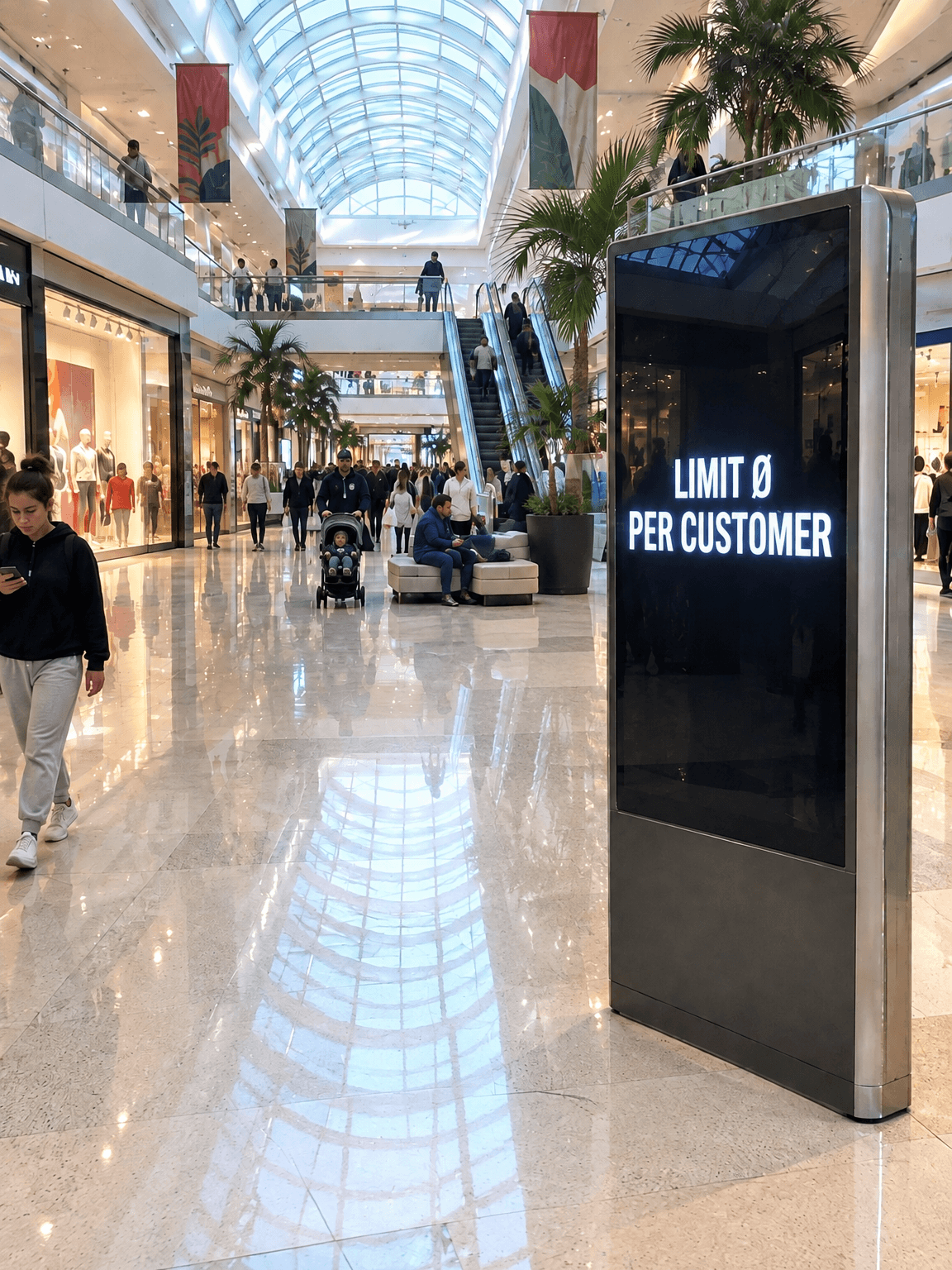
So I used that image as the reference and asked for the same picture with those people gone. I named each person I wanted out, said what should be there instead (empty shiny floor, the open hall behind them) and listed everything that had to stay. The screen, the hall and the rest of the shoppers came back the same.
Exact prompt
Create a new photorealistic image, but with two groups of people removed. Preserve everything else from the first reference exactly. NO woman in the white sweater and jeans carrying shopping bags beside the kiosk — that spot is now empty glossy terrazzo floor with the skylight reflection continuing across it. NO man and woman carrying boxed appliances on the left side — the space where they walked is now open floor with the mall concourse visible behind. THE VIBE: Peak weekend shopping in a bright mall concourse, and a glowing digital kiosk borrowing doorbuster fine print for a deadpan joke. Shoppers drift past in the background without a glance. Witty, quietly subversive, captured as a casual phone snapshot. THE SUBJECT (UNCHANGED): The same tall brushed-aluminium and dark-grey digital kiosk on the right, from the first reference, its screen showing the same white text "LIMIT Ø" / "PER CUSTOMER" on black, same size and position. Do NOT change the text, font or kiosk. THE SETTING (UNCHANGED): The same mall concourse from the first reference — glossy cream terrazzo floor, barrel-vaulted skylight, glass-railed upper walkway, escalators, potted palms, hanging banners, storefronts with mannequins on the left, the bench seating area. Do NOT reimagine this environment. THE CROWD: Keep the remaining shoppers from the first reference exactly as they are — the teen in the black hoodie on her phone at the far left, the dad pushing the stroller, the people seated on the bench, the shoppers in the mid-distance and on the escalators and upper walkway. The foreground directly in front of and beside the kiosk is clear, so the kiosk stands on its own with open floor around it. THE FACE: Natural skin texture, no airbrushing, no plastic or waxy skin. THE LIGHT (UNCHANGED): The same soft skylight daylight, warm recessed lights and the kiosk's cool glow on the floor, with the same glossy reflections, as in the first reference. THE MOOD: Everyday American mall realism, clean bright colour grade with warm accents, mild contrast. THE COMPOSITION (UNCHANGED): Same portrait framing and camera position as the first reference — kiosk on the right third, concourse receding to the left. THE CAMERA: Shot on an iPhone at standing eye level, deep focus, everything sharp, NO background blur; casual social-media snapshot.
Why it works
Real ads come with a lot of boring stuff around them: poles, frames, grommets, plastic covers, people walking by without looking. When I put that stuff in the prompt, the slogan sits in the scene like someone paid to put it there, and that's when the joke gets funny.
Your turn: write one fake slogan in sale-speak and pick the place in your city where it would look the most out of place.
Emero writes the prompt for every placement and remembers the look you picked, so the next ad matches the last one, at cost.

Get one of these every day
I test new workflows daily and send them with the exact prompts, the models and the costs
5,979 generations tested so far
More workflows
See all
GPT Image 2.5 Flare - fix one thing in an image without losing the rest
Change one detail in an AI image, like size, mood or pose, while the rest of the picture stays put
GPT Image 2.5 Flare · 2 min render

GPT Image 2.5 Flare - Gen Z slang taken literally
Turn slang like spill the tea, glazing and catfished into photos that show the words literally
GPT Image 2.5 Flare · 2 min render
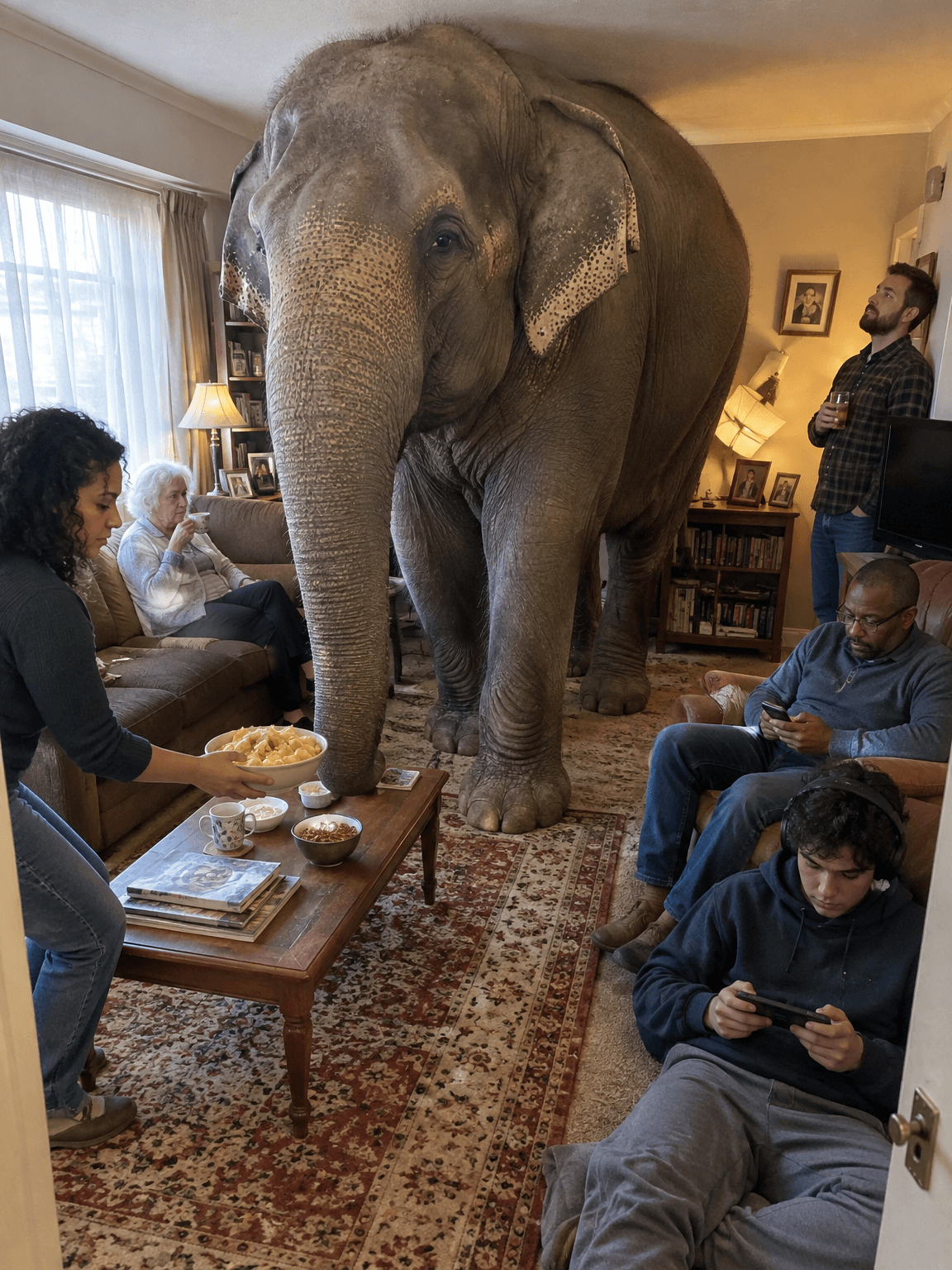
GPT Image 2.5 Flare - old sayings turned into deadpan photos
Turn everyday sayings into realistic photos where one impossible thing happens and nobody reacts
GPT Image 2.5 Flare · 1 min render