Disclaimer: This is an independent creative test made with AI, for demonstration only. It isn't an ad for any brand shown or named, and isn't affiliated with, sponsored or endorsed by them. All trademarks belong to their owners
Gemini - five clothing product shots from one jacket photo
Turn one plain jacket photo into a hero, macro, flat lay, room shot and sunset still life
 Tested by Nouamane Benbrahim
Do you really need a photographer for clothing product shots?
I wanted to find out with one jacket. All I had was a single photo of it on a white background, and I wanted five product shots that look like they came from a real 1970s shoot. A hanger shot, a macro, a flat lay, a room shot and one outdoors.
Here's my exact process.
1. Pick a new camera distance for every shot
Before I write anything, I plan the five shots from far to close. One wide room where the jacket is small, one outdoor still life, one hanger shot where it fills the frame, one flat lay from straight above and one macro on a single detail.
2. Start with the hero
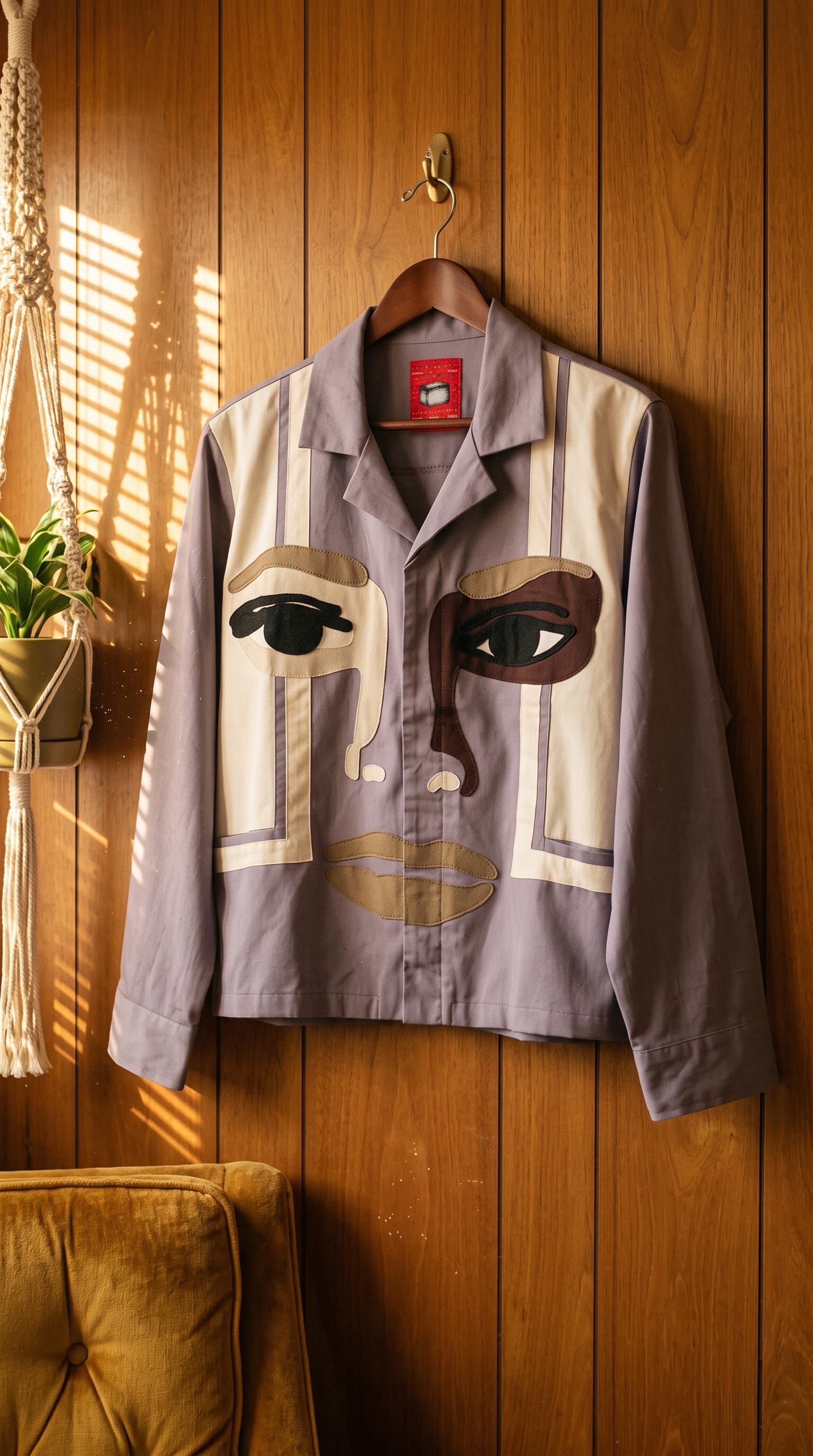
The hero shot is the jacket on a wooden hanger against a wood-paneled wall. I asked for one hard beam of low sun coming through venetian blinds, and here's the trick: I told it the striped shadows fall on the wall but NOT on the graphic. Stripes across the face would make the print hard to read.
I also asked for a few lint specks and a slight crease at the collar. Product shots from AI come out way too clean, so I add little flaws back on purpose.
Exact prompt
Create a new photorealistic image. A product hero photograph of a jacket hanging in a warm 1970s interior. THE VIBE: A quiet, reverent portrait of the garment itself — the jacket as the character in the room, lit like a painting in a sun-warmed 1970s home. IDENTITY LOCK: The product is preserved exactly from the first reference — the cropped, boxy long-sleeve camp-collar shirt-jacket in dusty lavender-grey cotton twill with two cream vertical panel stripes down the front and the stitched appliqué abstract face across the chest: the left eye on a cream patch with black eye shape and tan brow, the right eye on a dark chocolate-brown patch with tan brow, cream and brown nose shapes, full tan appliqué lips, the small red woven label inside the collar. Every patch shape, colour and proportion matches the reference. Do NOT redesign. THE SUBJECT: The jacket hangs from a curved dark wooden hanger on a brass wall hook, facing camera squarely, fabric falling naturally with soft folds at the sleeves and slight drape at the hem; the raised stitched edges of the appliqué catch the light with visible thread and shadow depth; matte twill weave visible. THE SETTING: Honey-toned vertical wood paneling wall, a slice of a macramé plant hanger at the edge, a mustard velvet chair back just in frame at bottom-left. THE LIGHT: A single hard shaft of low golden sunlight through venetian blinds raking across the wall and jacket from frame-left, striped shadows falling across the wall but NOT across the appliqué face, warm rim light on the shoulder edges separating it from the wall, fine dust motes in the beam. THE KEY DETAILS: Thread texture on the appliqué, a few loose lint specks, slight crease at the collar. THE MOOD: Warm-nostalgic 70s grade — honey wood, amber light, lavender garment as the cool focal point. THE COMPOSITION: Vertical, jacket centred and dominant, filling two-thirds of the frame, straight-on, generous wall space around it. THE CAMERA: Editorial product still, 50mm lens, eye level, shallow depth of field on the background edges, jacket razor-sharp. Every element feels tactile and present, highly detailed. THE AFTER EFFECT: Fine film grain and soft warm fade across the frame. THE LABEL: The small red woven collar label visible but de-emphasised, no legible fine print.
This one came out super close to the real jacket. Every patch is where it should be.
3. Go in close on the stitching
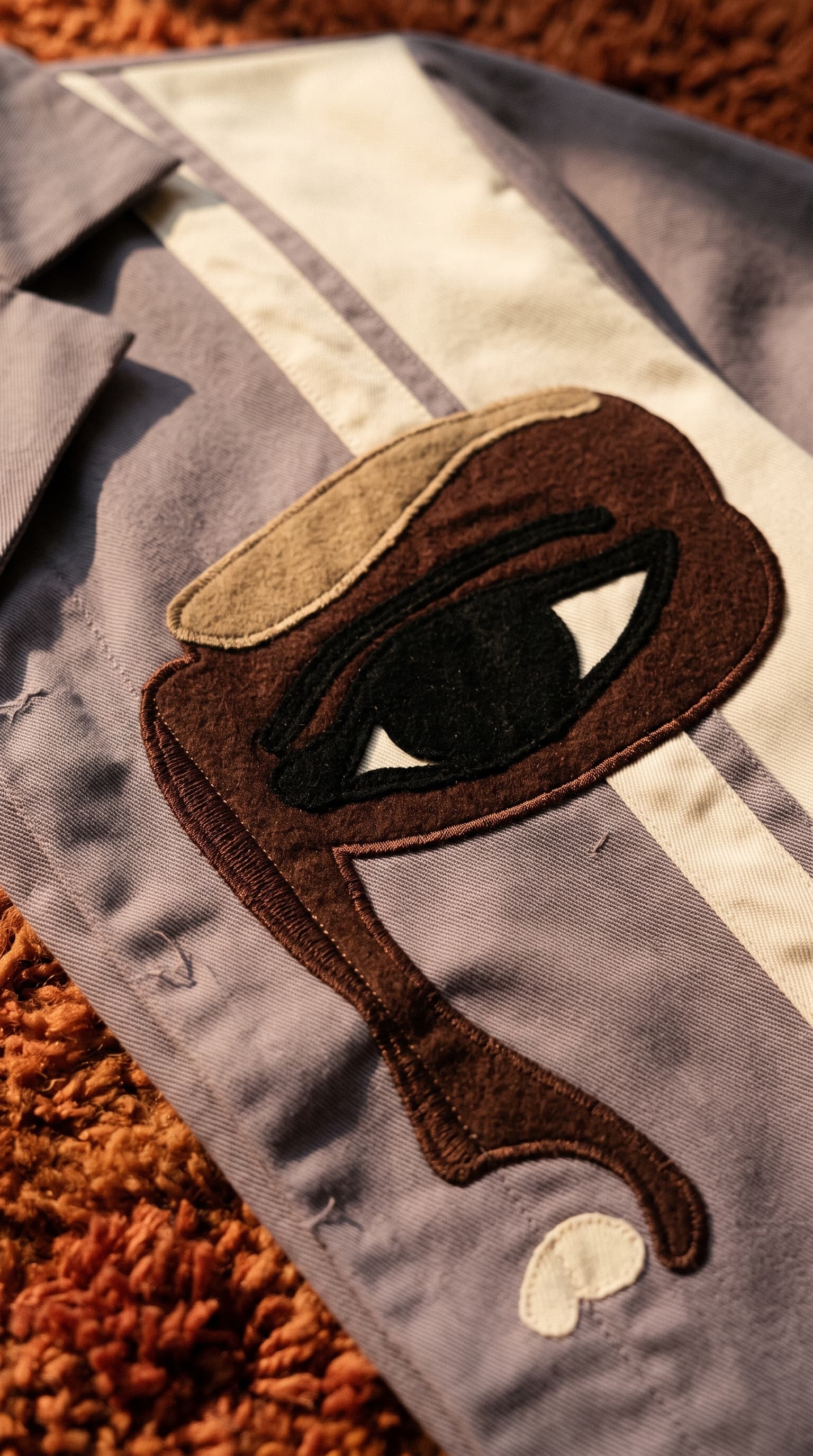
Next I go macro on one eye patch, with the jacket lying on a burnt-orange shag rug. The light comes in low from the side so every stitched edge throws a tiny shadow. That way you can see the patches sit on top of the fabric.
Exact prompt
Create a new photorealistic image. An extreme macro detail photograph of a garment appliqué. THE VIBE: Intimate and tactile — the handmade craft of the piece, every stitch a signature, warm like a fingertip on fabric in afternoon sun. IDENTITY LOCK: The detail is preserved exactly from the first reference — the dusty lavender-grey cotton twill shirt-jacket with the stitched appliqué face: the dark chocolate-brown right eye patch with a black almond eye shape and the tan appliqué brow above it, bordered by the cream vertical panel stripe. Do NOT change colours or shapes. THE SUBJECT: A tight macro on the dark chocolate-brown eye patch and tan brow, the black eye shape at the centre, the edge where brown patch meets lavender twill and the cream stripe. Raised felt-like appliqué layers with visible thickness, tight tonal satin-stitch borders, individual threads, slight puckering at the seam, the diagonal twill weave of the lavender base visible, a couple of loose fibres. THE SETTING: The jacket lies on a burnt-orange shag rug, just a blur of rust fibres visible at one corner. THE LIGHT: Low raking warm sunlight from frame-left grazing across the surface, throwing tiny shadows from every raised stitch and patch edge to reveal relief, warm amber highlights, soft brown shadows. THE KEY DETAILS: The raised stitched edge of the eye patch catching light; thread tension visible. THE MOOD: Warm-nostalgic 70s grade — chocolate, tan, cream, dusty lavender. THE COMPOSITION: Vertical, the eye patch filling most of the frame on a slight diagonal, cream stripe running along the right edge. THE CAMERA: Macro lens, very shallow depth of field with focus rolling off at the edges, tactile and hyperreal, highly detailed. THE AFTER EFFECT: Fine film grain across the frame.
I'd check this one against the real jacket before posting it. The patch came out looking like felt, and the drip under the eye runs a lot longer than it does on the actual piece.
4. Build the flat lay from the era
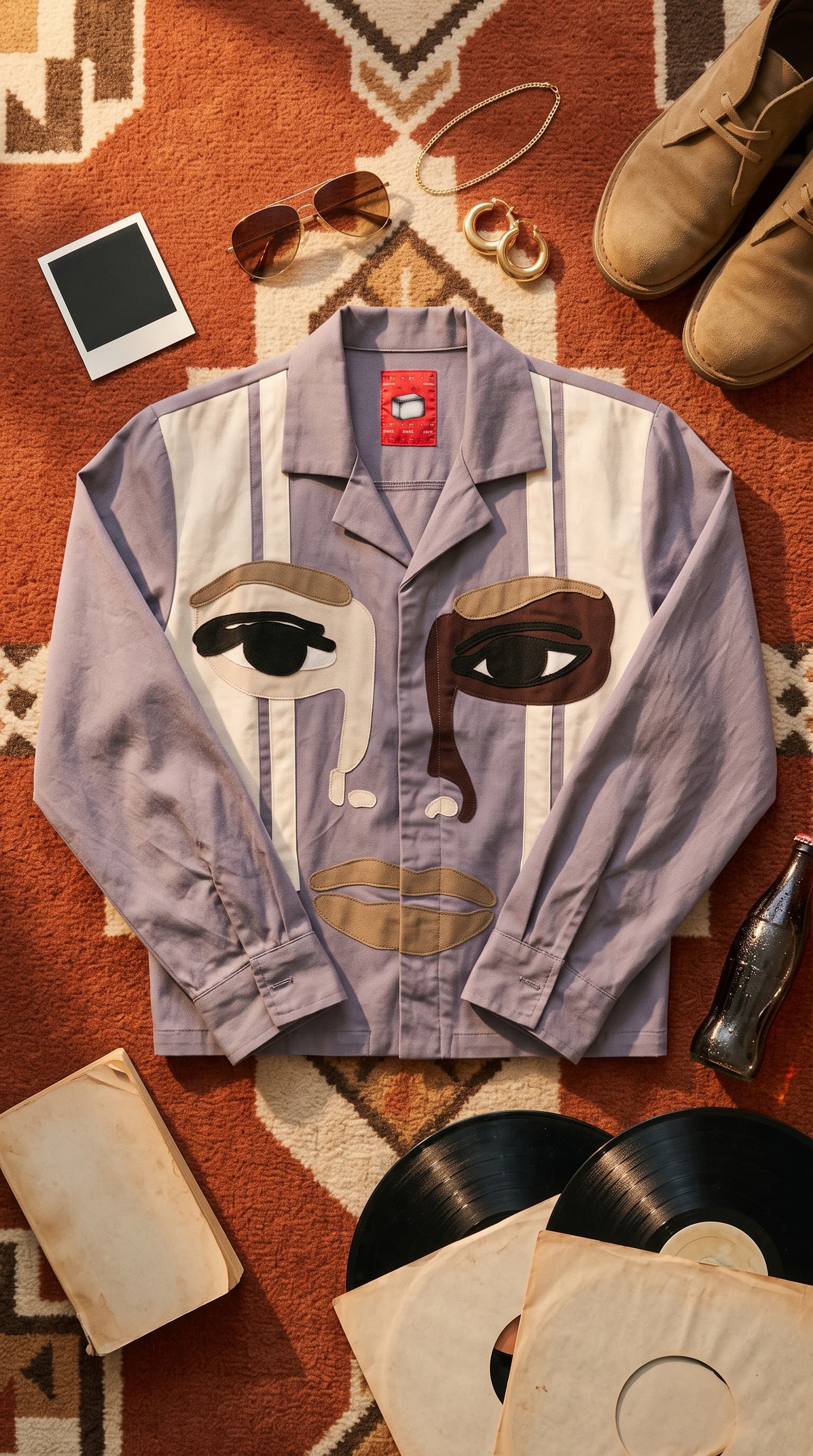
For the flat lay I shot straight down on a patterned wool rug and surrounded the jacket with stuff someone in 1977 would actually own: two worn records, gold aviators, a gold chain and hoops, an instant photo, suede boots and a bottle of cola with condensation on it.
One tip: tell it every prop is plain, with no logos and no text. I added this after a record sleeve in another shot from this jacket came out with a real band's name printed on it.
Exact prompt
Create a new photorealistic image. A top-down flat-lay product photograph. THE VIBE: A curated 1970s weekend in objects — the jacket at the centre of a life of records, sunshine and road trips. Warm, collected, nostalgic. IDENTITY LOCK: The product is preserved exactly from the first reference — the cropped, boxy camp-collar shirt-jacket in dusty lavender-grey cotton twill with two cream vertical panel stripes and the full stitched appliqué abstract face: cream left eye patch with black eye and tan brow, dark chocolate-brown right eye patch with tan brow, cream and brown nose shapes, full tan appliqué lips, red woven collar label. Do NOT redesign. THE SUBJECT: The jacket laid flat and face-up, collar open, sleeves folded softly inward, the full appliqué face entirely visible and centred. THE SETTING: A vintage burnt-orange and cream geometric-pattern wool rug as the surface. Arranged around the jacket: two worn vinyl records half out of plain unbranded sleeves, gold aviator sunglasses with brown gradient lenses, a thin gold chain and chunky gold hoop earrings, a blank-faced instant photo print, a pair of tan suede boots at one corner, a glass bottle of cola with condensation, a paperback face down. THE LIGHT: Warm late-afternoon window light from frame-top-left, soft directional, gentle shadows cast to the lower right, specular glints on the gold and glass, condensation droplets catching light. THE KEY DETAILS: Slight dust on the record surfaces, creases in the jacket sleeves, all objects plain with no brand logos or legible text. THE MOOD: Warm-nostalgic 70s grade — rust, cream, gold, brown, the lavender jacket as the focal cool tone. THE COMPOSITION: Vertical, perfect overhead angle, jacket centred and dominant at about half the frame, props balanced loosely around it with breathing room, asymmetric arrangement. THE CAMERA: Overhead editorial product still, everything in sharp focus, tactile and highly detailed. THE AFTER EFFECT: Fine film grain and soft warm fade.
5. Make the jacket small in a big room
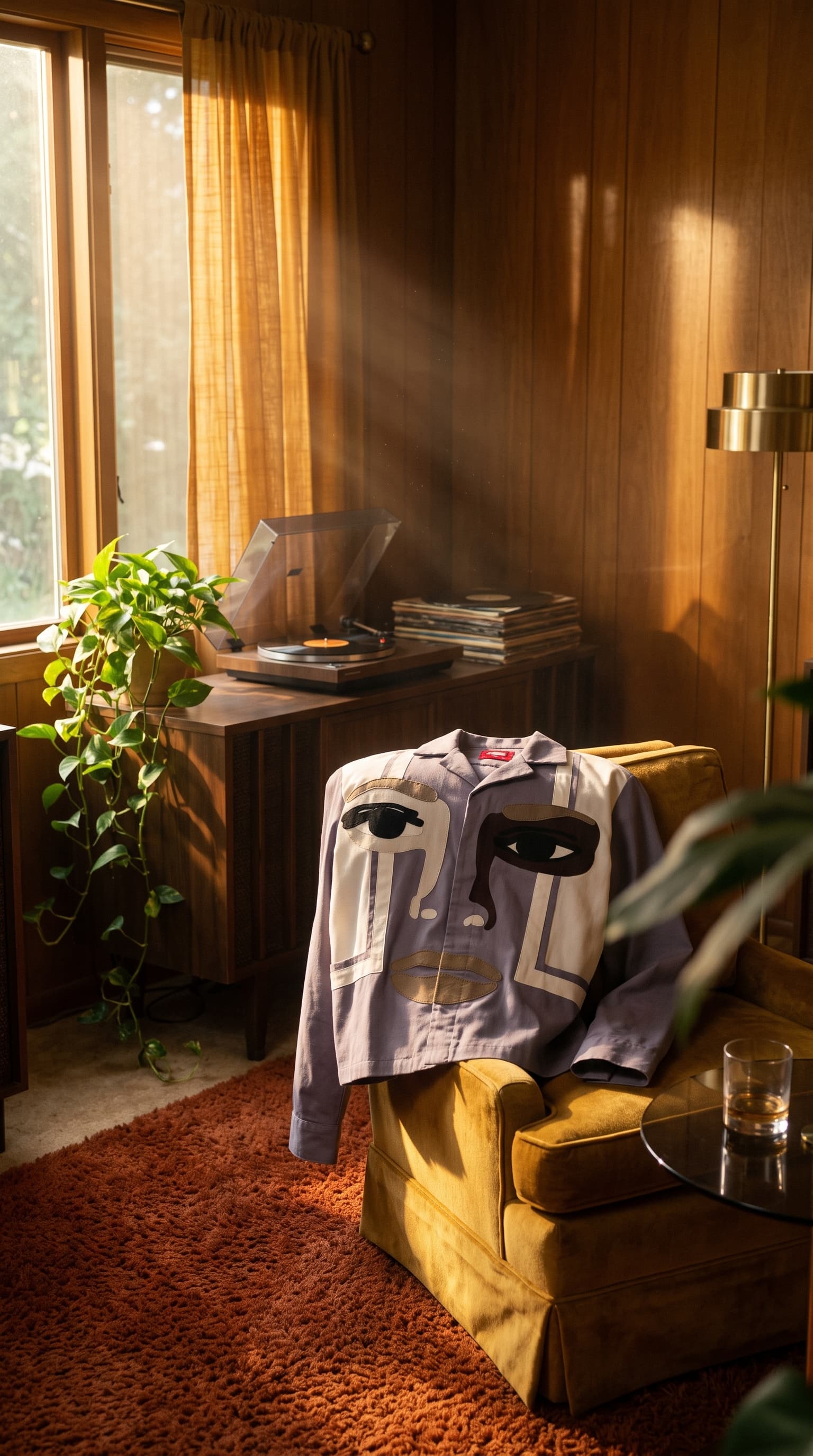
For the room shot the jacket only takes up about a quarter of the frame. It's tossed over a mustard velvet armchair, a turntable sits by the window and the sun comes through the curtains with dust in the air. The idea is that someone just stepped out of the room.
I also put an out-of-focus plant leaf right at the edge of the frame. I like how that bit of blur in front gives the room some depth.
Exact prompt
Create a new photorealistic image. An atmospheric interior photograph where a jacket is part of a sunlit 1970s room. THE VIBE: Someone just stepped out of the room — the jacket tossed over a chair, the record still turning, the afternoon glowing. Quiet, cinematic, evocative. IDENTITY LOCK: The product is preserved exactly from the first reference — the cropped, boxy camp-collar shirt-jacket in dusty lavender-grey cotton twill with two cream vertical panel stripes and the stitched appliqué abstract face: cream left eye patch with black eye and tan brow, dark chocolate-brown right eye patch with tan brow, cream and brown nose shapes, full tan appliqué lips. Do NOT redesign. THE SUBJECT: The jacket draped casually over the back and arm of a mustard velvet armchair, the appliqué face turned toward the camera and readable, sleeves hanging loose. THE SETTING: A spacious 1970s living room: honey wood paneling, a tall window with amber sheer curtains, a walnut hi-fi cabinet with a turntable and a stack of records, a trailing pothos plant, a burnt-orange shag rug, a brass floor lamp, a smoked-glass side table with a half-drunk glass. Lived in, not a showroom. THE LIGHT: Strong golden-hour sun pouring through the sheer curtains from behind-left, long warm light shafts with visible dust in the air, the chair and jacket caught in a pool of warm light, the rest of the room in rich brown shadow. THE KEY DETAILS: Light shaft landing across the jacket; soft haze in the air. THE MOOD: Warm-nostalgic 70s grade — amber, mustard, honey, lavender jacket. THE COMPOSITION: Vertical, wide environmental shot, the chair and jacket in the lower-right third occupying about a quarter of the frame, window light leading the eye from upper-left, foreground out-of-focus plant leaf at the edge. THE CAMERA: Cinematic editorial still, 28mm lens, eye level, moderate depth of field, all light from the window, no studio lighting, naturalistic Deakins-style. THE AFTER EFFECT: Full-frame film grain, soft halation around the window, lifted blacks.
6. Take it outside at sunset
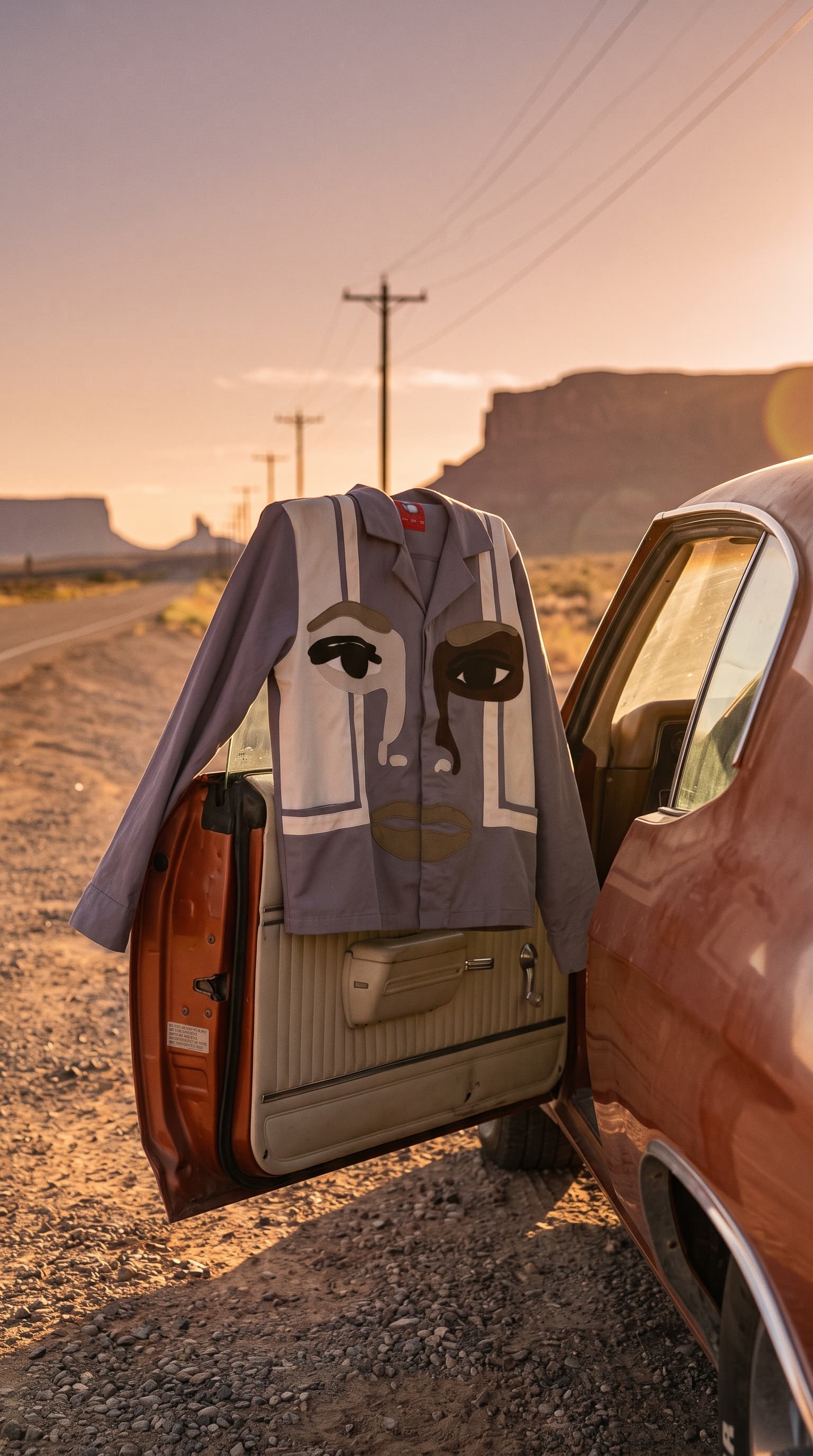
Last one: the jacket slung over the open door of a rust-orange coupe on a desert highway, with the sun setting right behind the car. With the sun behind it you get a warm glow around the jacket's edges and the chrome.
Exact prompt
Create a new photorealistic image. A product still-life photograph of a jacket on a vintage car at dusk. THE VIBE: End of the drive, 1970s Americana — the jacket slung over an open car door as the sun sinks. Romantic, road-trip nostalgia. IDENTITY LOCK: The product is preserved exactly from the first reference — the cropped, boxy camp-collar shirt-jacket in dusty lavender-grey cotton twill with two cream vertical panel stripes and the stitched appliqué abstract face: cream left eye patch with black eye and tan brow, dark chocolate-brown right eye patch with tan brow, cream and brown nose shapes, full tan appliqué lips. Do NOT redesign. THE SUBJECT: The jacket slung over the top edge of the open driver's door of a rust-orange 1970s coupe, hanging with the front and appliqué face facing camera, one sleeve dangling down the door panel. THE SETTING: The car parked on the gravel shoulder of a desert highway, cream vinyl interior visible through the door, chrome window trim, distant mesas and a telephone pole line, dusty ground. THE LIGHT: Low setting sun directly behind the car, strong warm rim light outlining the jacket edges and door chrome, a soft warm lens flare, the jacket front gently lit by golden bounce off the ground, sky graded peach to dusty lavender. THE KEY DETAILS: Dust on the car paint, chrome specular glint echoing the rim on the jacket, no license plate text. THE MOOD: Warm-nostalgic 70s grade, sunset peach and rust with the lavender sky echoing the jacket. THE COMPOSITION: Vertical, low-angle three-quarter view, jacket and door in the centre-left foreground dominant and sharp, car body receding right, horizon low. THE CAMERA: Cinematic editorial still, 35mm lens, low angle, shallow depth of field with the landscape softly out of focus, all light from the setting sun, no studio lighting. THE AFTER EFFECT: Full-frame film grain, warm lens flare at upper right, lifted blacks, faded print colour.
And listen, it's not perfect. The jacket kind of floats on the door frame instead of hanging over it. I'd fix that before using it anywhere big.
Why it works
I kept the warm 70s colors, the low sun and the grain in every prompt, so the five shots look like one shoot. Then I planned where the camera sits before anything else, and that's how I got a macro, a flat lay and a wide room out of one plain product photo.
Your turn: take one product photo and write down five camera distances before you make a single image.
And if you've got a whole catalog to shoot, Emero remembers your products and writes these prompts for you, at cost.

Get one of these every day
I test new workflows daily and send them with the exact prompts, the models and the costs
5,979 generations tested so far
More workflows
See all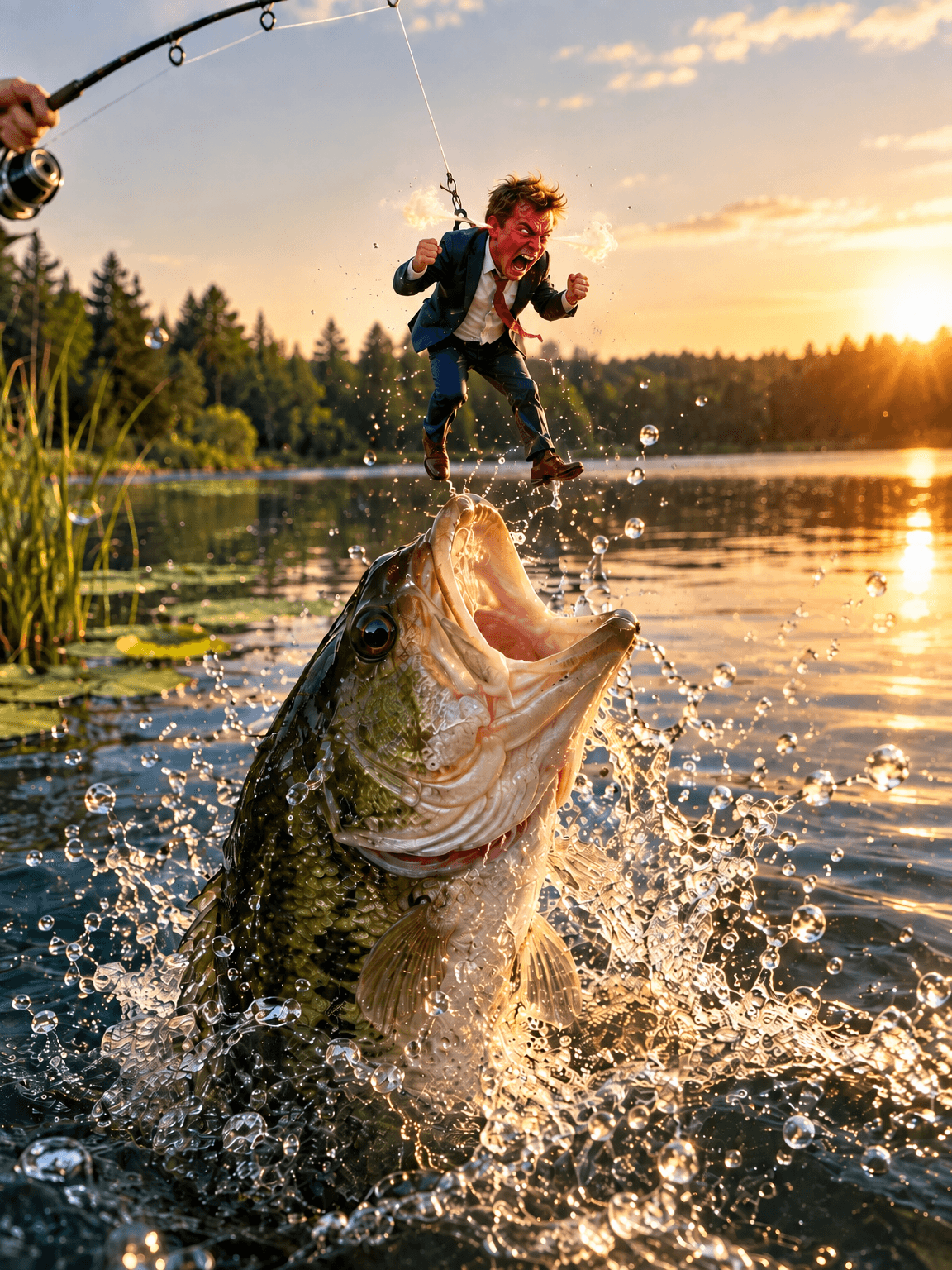
GPT Image 2.5 Flare - fix one thing in an image without losing the rest
Change one detail in an AI image, like size, mood or pose, while the rest of the picture stays put
GPT Image 2.5 Flare · 2 min render
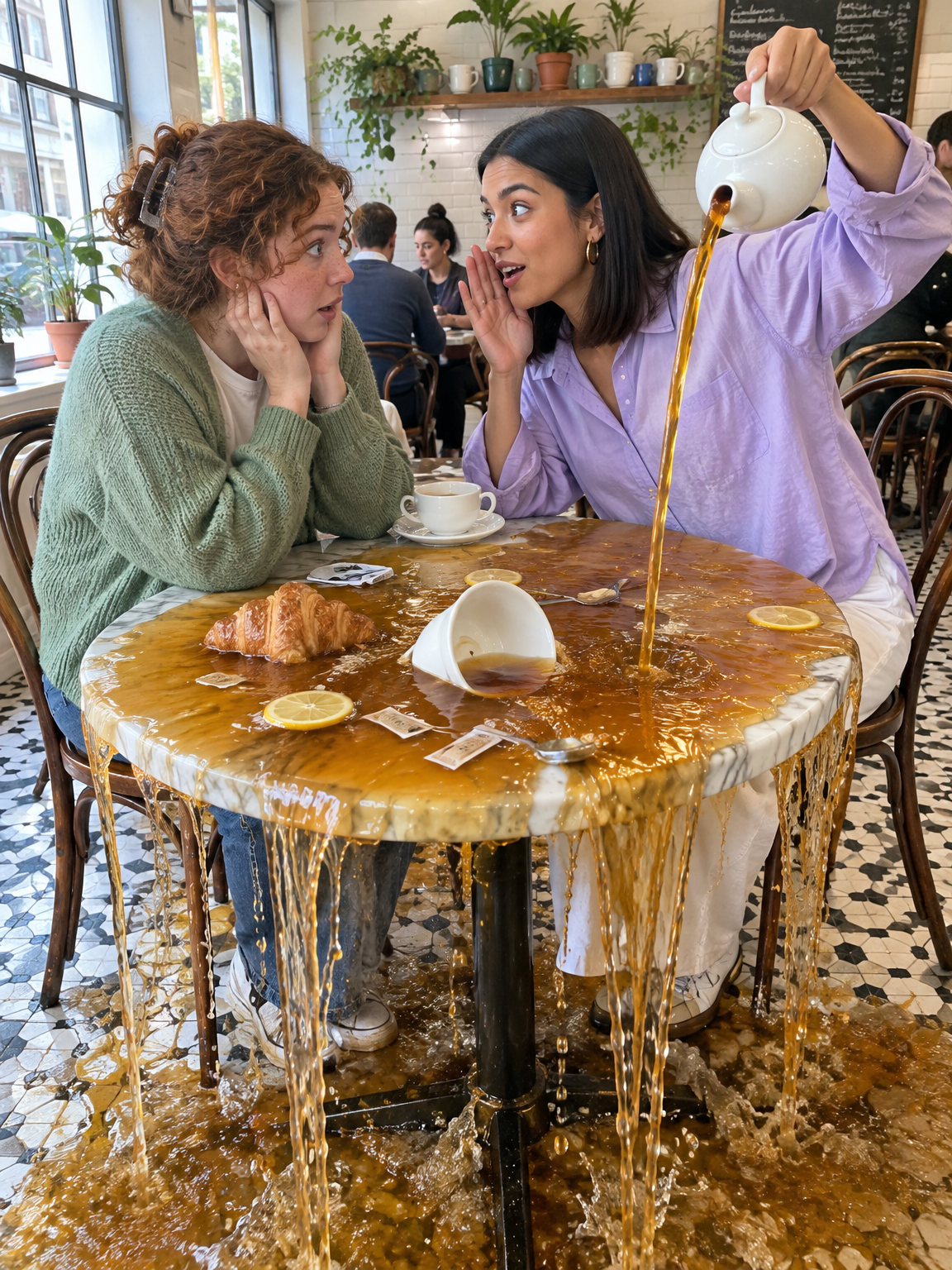
GPT Image 2.5 Flare - Gen Z slang taken literally
Turn slang like spill the tea, glazing and catfished into photos that show the words literally
GPT Image 2.5 Flare · 2 min render
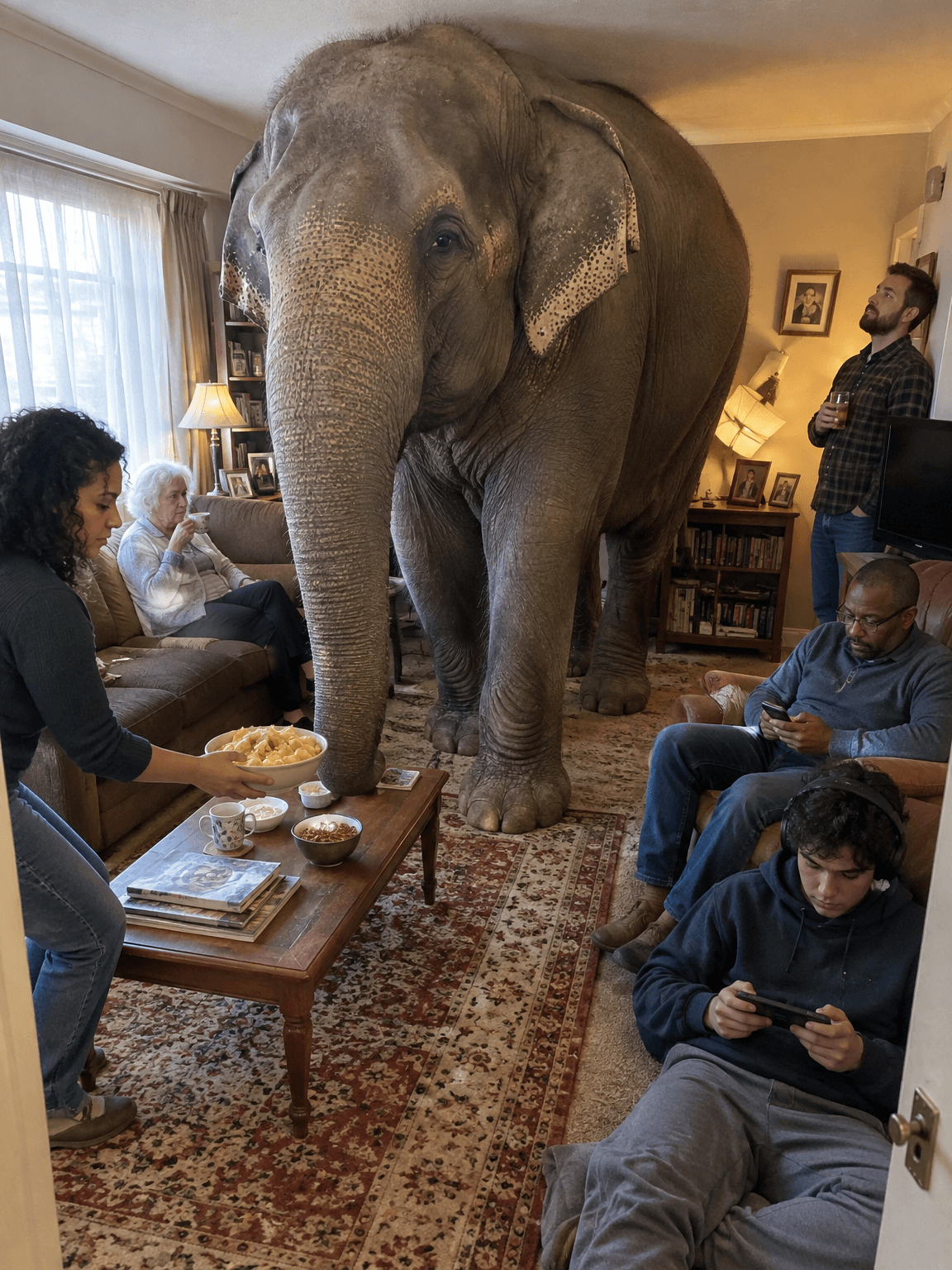
GPT Image 2.5 Flare - old sayings turned into deadpan photos
Turn everyday sayings into realistic photos where one impossible thing happens and nobody reacts
GPT Image 2.5 Flare · 1 min render