Disclaimer: This is an independent creative test made with AI, for demonstration only. It isn't an ad for any brand shown or named, and isn't affiliated with, sponsored or endorsed by them. All trademarks belong to their owners
GPT Image 2.5 Sunburst - menswear lookbook with motion blur
A still model in a busy atelier, with blurred staff walking past him
 Tested by Nouamane Benbrahim
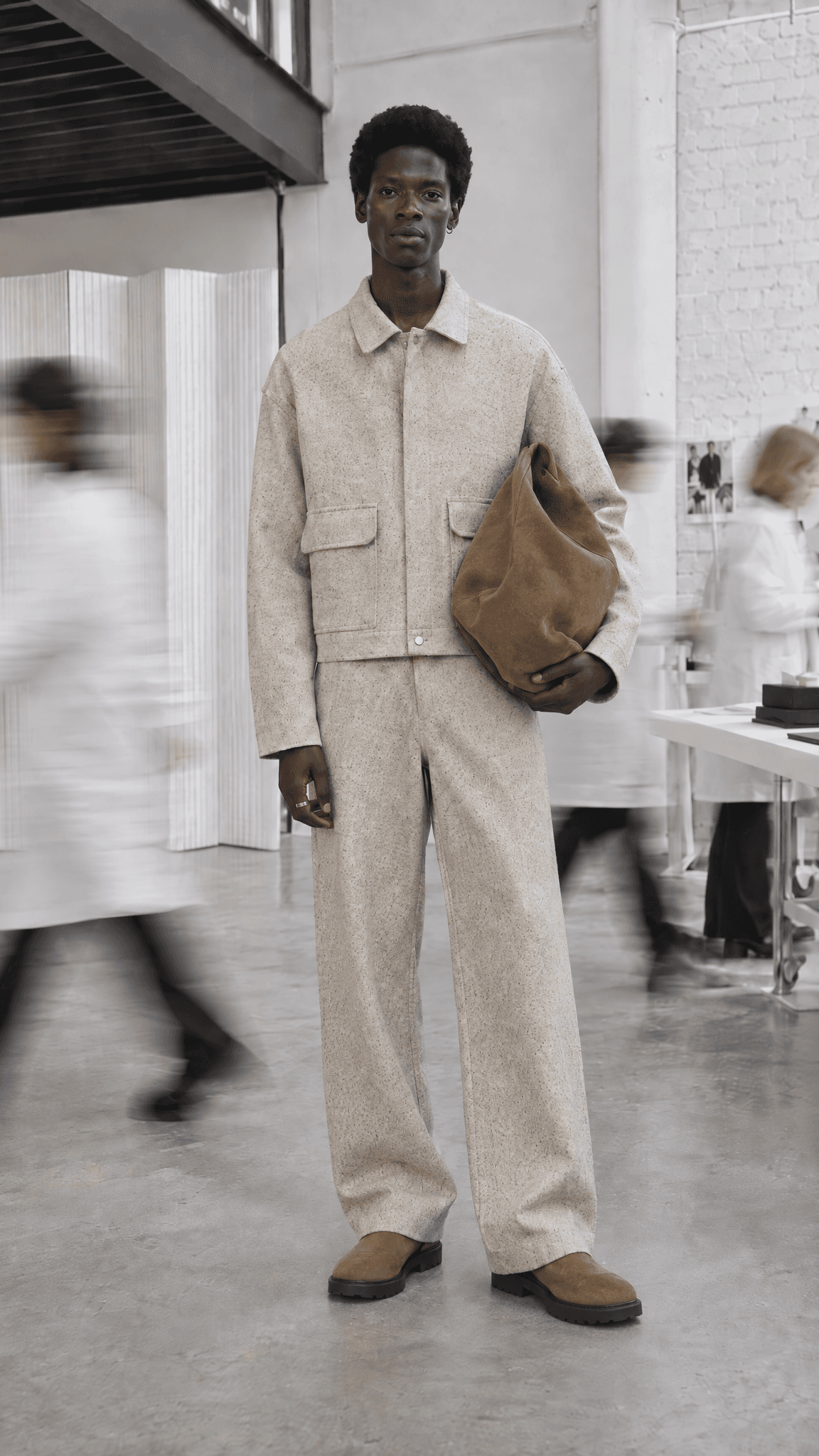
Why do AI fashion shots always look like a mall ad?
I found a menswear lookbook shot I loved. A model standing perfectly still in an oatmeal suit while blurred staff in white coats rush past him in a white workshop. I wanted to see how close I could get from a text prompt alone.
Here's my exact process.
1. The lazy version
First, the simple version: a model in a beige suit with a suede bag, a white studio, people walking around, fashion photo, high quality.
You get a white void with no sense of place, a generic suit with a tee and a belt, a duffel hanging by its handles, and a "fashion week" crowd in sunglasses. It looks like every other AI fashion image out there.
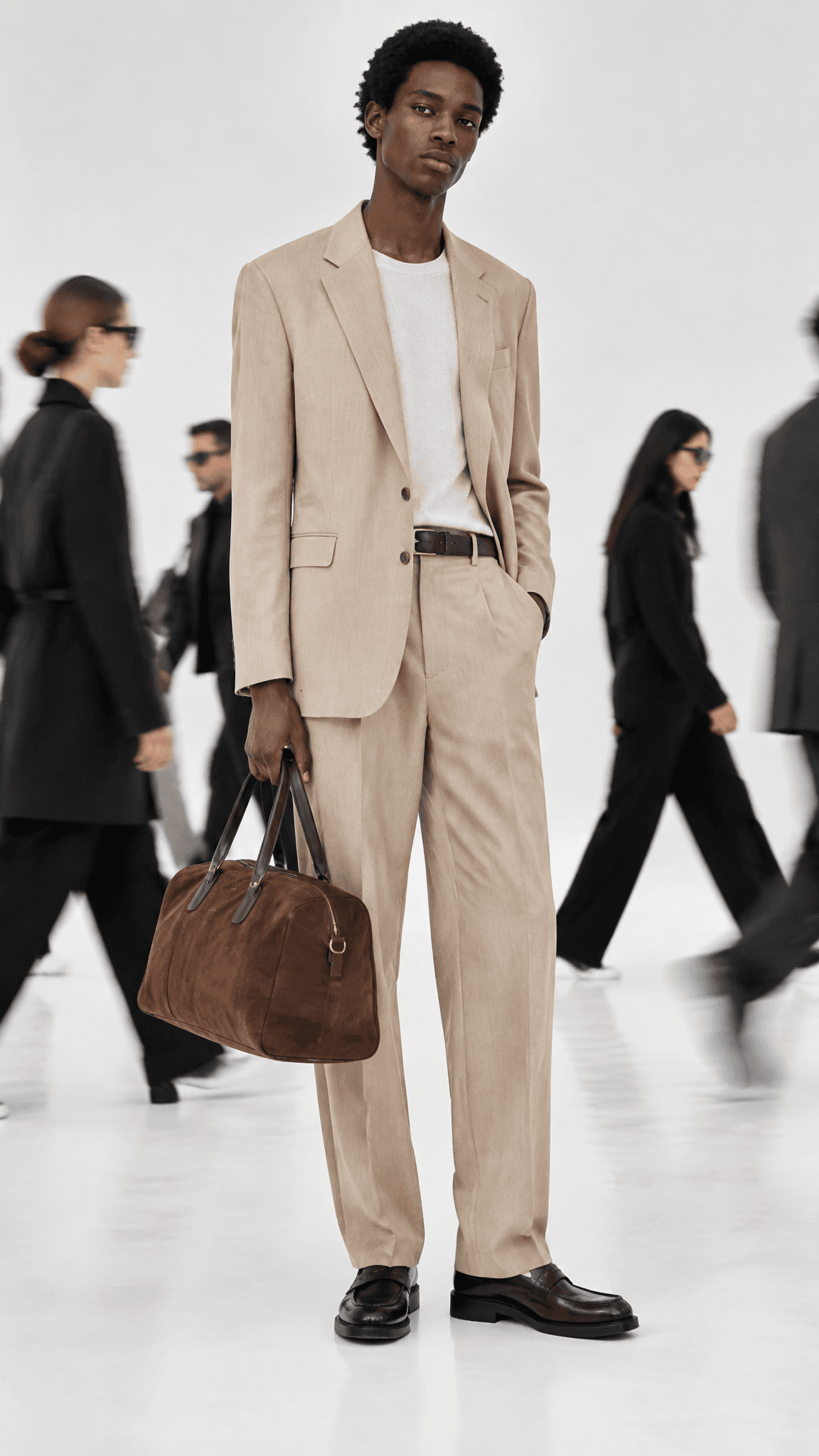
Exact prompt
A tall slim Black male model with a short afro wearing a beige suit and holding a brown suede bag, standing in a white studio with people walking around, fashion photo, high quality, 4k.
2. Name the place and the effect
Then I described the actual place. A white industrial loft used as an atelier, a pleated paper screen, a white brick wall, a concrete floor, staff in long white coats. And I named the effect and where it hits: a long exposure where the staff smear into ghosts and the model stays razor sharp.
The first try nailed the scene. But the suit fabric came out looking like confetti, the bag was a tiny bucket bag, the shoes were shiny leather, and there was a steel rack on the left that I hated. My exact words: "i hate the metallic shelf on the left take it out".
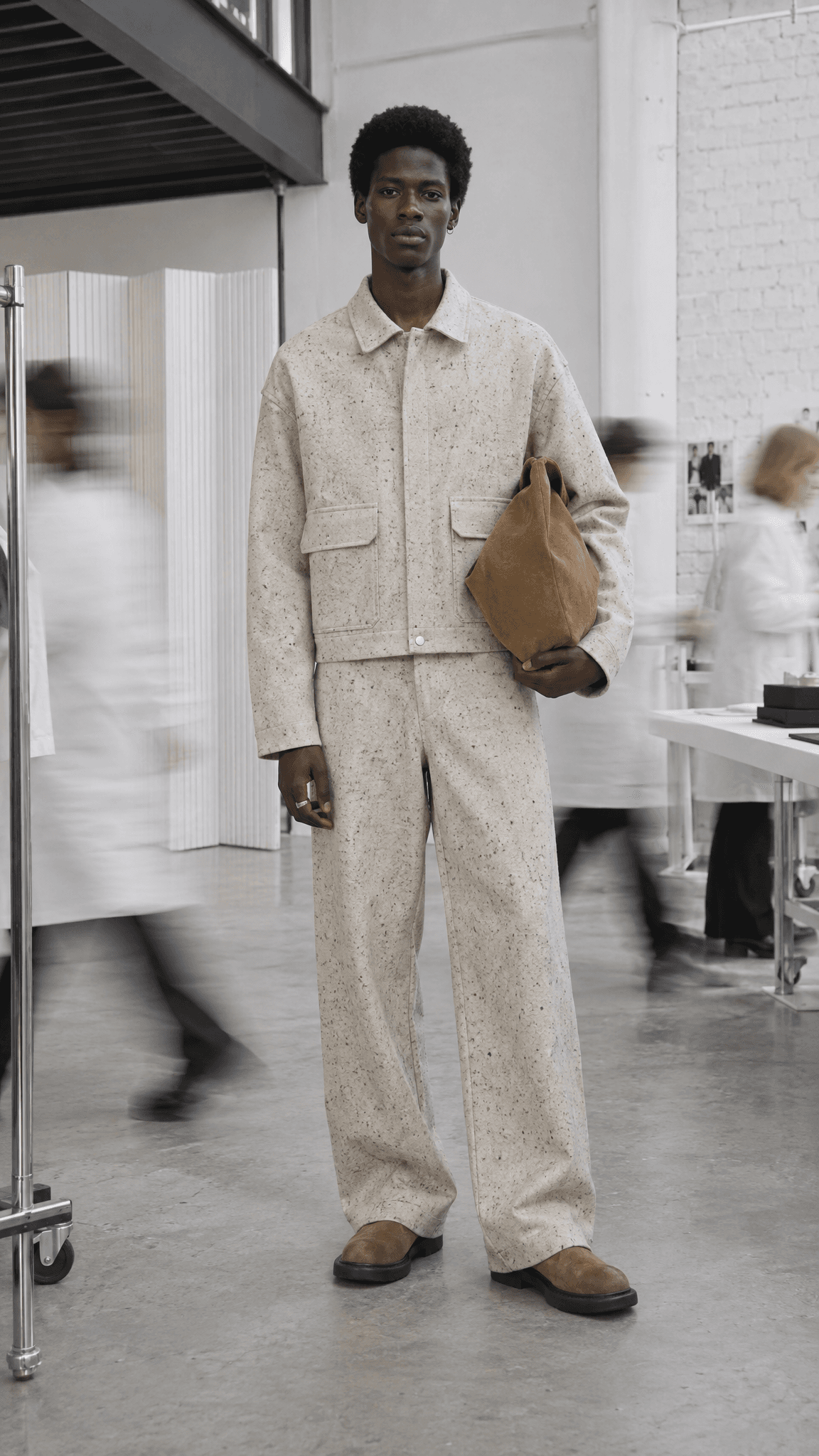
Exact prompt
Create a new photorealistic image. Editorial fashion photography, unretouched, no beauty filter, no skin smoothing. A menswear lookbook photograph taken inside a working white atelier: one model standing perfectly still and sharp while blurred staff in white coats stream past him. THE VIBE: Calm stillness in the middle of a busy workshop. Quiet, minimal, expensive: a Scandinavian-style menswear campaign where the clothes and the stillness are the point. The model is the only fixed thing in a room in motion. IDENTITY LOCK: A Black male model in his twenties, tall and slim with long limbs, very deep brown skin with a cool-neutral undertone, a short rounded natural coily afro (about 5 cm high, slightly squared), a long oval face with high cheekbones, a straight nose, full lips, a small silver hoop earring in his left ear, a thin silver ring on his right hand. THE SUBJECT: He wears the matching oatmeal-ecru slub tweed suit: a heavy linen-cotton weave with fine dark flecks all over. The jacket is a cropped boxy work jacket ending at the hip, with a pointed shirt collar, a concealed front placket with one visible silver snap at the hem, two flap patch pockets on the lower chest, dropped shoulders and slightly long sleeves. The trousers are the same fabric, high-waisted, straight and wide, full length, breaking softly on the shoes. On his feet, chunky round-toe tan suede boots with black rubber soles. Under his left arm he holds a large slouchy cognac-tan suede hobo bag, pressed against his hip and supported from below by his left hand. He stands squarely facing the camera, feet shoulder-width apart, weight even, right arm hanging relaxed with the fingers loosely curled. Neutral, serious expression, lips closed, chin level, looking straight into the lens. THE FACE: Real, unretouched skin with fine visible texture, faint pores, slightly uneven natural tone. Mostly matte, natural shine only faintly on the nose and forehead. Minimal natural makeup: bare skin, no foundation, no contour, no highlighter. Cool-neutral depth in the shadows, never ashy or grey. THE SETTING: A bright converted industrial loft used as a fashion atelier. Behind him on the left, a tall white pleated paper folding screen; above it at the top left, a black overhanging mezzanine edge with a ribbed metal underside. On the right, a white-painted brick wall with a thick white pillar. A pale grey polished concrete floor. In the left foreground edge, the vertical post of a brushed steel rolling rack, partly cut off by the frame. On the right, a long white work table with a black tray on it. Three staff members in long white work coats and black trousers: one walking across the left of the frame mid-stride, one walking right behind him on his left side, and a woman with a short blonde bob in a white coat at the right edge by the table. THE LIGHT: Soft, even, diffuse daylight from large skylights and windows above and to the left, the only light. Low contrast, soft open shadows, gentle shadow under his feet on the concrete, no hard highlights. The white walls bounce light everywhere. Muted, desaturated, slightly cool-neutral grade: whites and greys dominate, the only warm colour is the tan suede of the bag and boots and his skin. THE KEY DETAILS: The flecked texture of the tweed readable up close; the silver snap at the jacket hem; the suede nap on the bag and boots; the earring catching a little light. THE MOOD: Quiet luxury lookbook, minimal and architectural. Palette: chalk white, oatmeal, concrete grey, black, cognac tan. THE COMPOSITION: Vertical 9:16, full-length. He stands slightly right of centre, his full body from hair to soles filling about 88% of the frame height: the top of his hair sits about 9% below the top edge, his boots sit just above the bottom edge. The blurred walkers overlap the frame edges and pass behind him, never covering him. THE CAMERA: Cinematic editorial fashion photograph on film, a moderate wide-normal lens at waist height, very slightly looking up, deep focus with the background only slightly soft, fine natural film grain across the whole frame including his face and skin. THE AFTER EFFECT: A slow-shutter long exposure. The three walking staff are smeared into soft horizontal ghosting motion blur, semi-transparent, their faces and legs dissolved; the model is perfectly sharp and still, every fleck of the tweed crisp. Looks like a real model photographed on location, not a render.
3. Give textures a size
"Flecked tweed" is what gave me confetti. The original is a fine, tonal weave with tiny flecks that read as one calm color from a distance. Once I said it that way, the fabric was right on the first try, and the rack was gone.
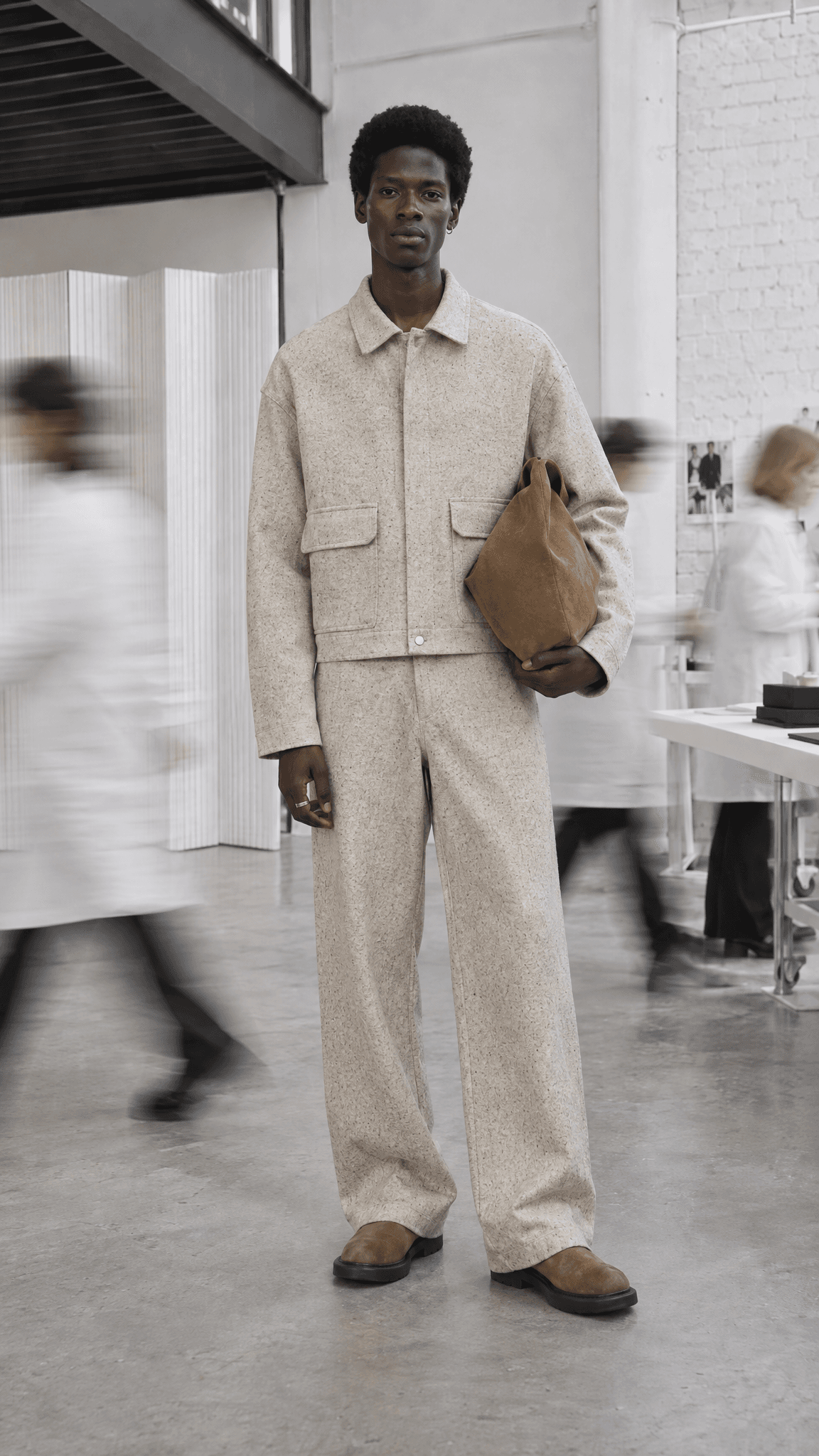
Exact prompt
Create a new photorealistic image, but with the wardrobe refined and the steel rack removed. Preserve the model, his face, hair, skin, pose, the setting, the walkers and the framing from the first reference. Editorial fashion photography, unretouched, no beauty filter, no skin smoothing. A menswear lookbook photograph taken inside a working white atelier: one model standing perfectly still and sharp while blurred staff in white coats stream past him. THE VIBE: Calm stillness in the middle of a busy workshop. Quiet, minimal, expensive: a Scandinavian-style menswear campaign where the clothes and the stillness are the point. The model is the only fixed thing in a room in motion. IDENTITY LOCK: Preserve the Black male model from the first reference exactly: tall and slim, very deep brown skin, short rounded natural coily afro, long oval face, high cheekbones, small silver hoop earring, thin silver ring on his right hand. Do NOT change his face. THE SUBJECT: He wears the matching oatmeal-ecru slub tweed suit in a fine, tight, tonal weave: a soft heathered oatmeal surface with tiny, dense dark-brown and charcoal slub flecks woven into the yarn, subtle and even, reading as one calm textured colour from a distance. NOT large speckles, NOT confetti, NOT multicoloured dots. The jacket is a cropped boxy work jacket ending at the hip, with a pointed shirt collar, a concealed front placket with one visible silver snap at the hem, two flap patch pockets on the lower chest, dropped shoulders and slightly long sleeves. The trousers are the same fabric, high-waisted, straight and wide, full length, breaking softly on the shoes. On his feet, chunky round-toe boots in matte, napped tan suede (no shine, no smooth leather) with thick black rubber soles. Tucked under his left arm, a LARGE slouchy unstructured cognac-tan suede hobo bag, about the size of his torso, soft and folded in on itself, clamped between his upper arm and his hip, his left hand cupped under its bottom holding it up; no strap visible. He stands squarely facing the camera, feet shoulder-width apart, weight even, right arm hanging relaxed with the fingers loosely curled. Neutral, serious expression, lips closed, chin level, looking straight into the lens. THE FACE: Real, unretouched skin with fine visible texture, faint pores, slightly uneven natural tone. Mostly matte, natural shine only faintly on the nose and forehead. Minimal natural makeup: bare skin, no foundation, no contour, no highlighter. Cool-neutral depth in the shadows, never ashy or grey. THE SETTING: A bright converted industrial loft used as a fashion atelier. Behind him on the left, a tall white pleated paper folding screen; above it at the top left, a black overhanging mezzanine edge with a ribbed metal underside. On the right, a white-painted brick wall with a thick white pillar. A pale grey polished concrete floor. On the right, a long white work table with a black tray on it. Three staff members in long white work coats and black trousers: one walking across the left of the frame mid-stride, one walking right behind him on his left side, and a woman with a short blonde bob in a white coat at the right edge by the table. The left edge of the frame is clear: only the pleated screen, the floor and the blurred walker. NO steel rack, no metal pole, no rolling rail anywhere in the frame. THE LIGHT: Soft, even, diffuse daylight from large skylights and windows above and to the left, the only light. Low contrast, soft open shadows, gentle shadow under his feet on the concrete, no hard highlights. The white walls bounce light everywhere. Muted, desaturated, slightly cool-neutral grade: whites and greys dominate, the only warm colour is the tan suede of the bag and boots and his skin. THE KEY DETAILS: The fine slub texture of the tweed readable up close; the silver snap at the jacket hem; the soft suede nap on the bag and boots; the earring catching a little light. THE MOOD: Quiet luxury lookbook, minimal and architectural. Palette: chalk white, oatmeal, concrete grey, black, cognac tan. THE COMPOSITION: Vertical 9:16, full-length, same framing as the first reference. The blurred walkers overlap the frame edges and pass behind him, never covering him. THE CAMERA: Cinematic editorial fashion photograph on film, a moderate wide-normal lens, deep focus with the background only slightly soft, fine natural film grain across the whole frame including his face and skin. THE AFTER EFFECT: A slow-shutter long exposure. The walking staff are smeared into soft horizontal ghosting motion blur, semi-transparent, their faces and legs dissolved; the model is perfectly sharp and still, every fleck of the tweed crisp. Looks like a real model photographed on location, not a render.
There's a catch though: the bag and the shoes didn't change at all. I'd fed the last image back in, and the AI just copied them from it.
4. Say "replace"
So I told it to replace them, straight up. Replace the small bucket bag with a big slouchy suede bag tucked under his arm. Replace the shiny shoes with matte suede boots. That worked.
I also asked for his pose to match the original. It barely moved, but it was already close, so I left it.
Exact prompt
Create a new photorealistic image, but REPLACE the bag, REPLACE the shoes and change the pose. Preserve the model's face, hair, skin, the tweed suit, the setting, the walkers and the framing from the first reference. Editorial fashion photography, unretouched, no beauty filter, no skin smoothing. A menswear lookbook photograph taken inside a working white atelier: one model standing perfectly still and sharp while blurred staff in white coats stream past him. THE VIBE: Calm stillness in the middle of a busy workshop. Quiet, minimal, expensive: a Scandinavian-style menswear campaign where the clothes and the stillness are the point. The model is the only fixed thing in a room in motion. IDENTITY LOCK: Preserve the Black male model from the first reference exactly: tall and slim, very deep brown skin, short rounded natural coily afro, long oval face, high cheekbones, small silver hoop earring, thin silver ring on his right hand. Do NOT change his face. THE SUBJECT: He wears the matching oatmeal-ecru slub tweed suit from the first reference, in its fine, tight, tonal weave with tiny dense dark slub flecks: the cropped boxy work jacket with pointed collar, concealed placket, one silver snap at the hem, two flap pockets, dropped shoulders; the high-waisted straight wide trousers breaking softly on the shoes. THE BAG (REPLACE): Remove the small strapped bucket bag from the first reference completely. In its place, a LARGE slouchy unstructured cognac-tan suede hobo bag, roughly as big as his torso, soft and folded in on itself, no visible strap or handle. THE SHOES (REPLACE): Remove the shiny brown leather shoes from the first reference. In their place, chunky round-toe ankle boots in matte, napped tan suede the same colour as the bag, no shine, with thick black rubber soles. THE POSE: He stands tall and square to the camera, legs straight, heels about hip-width apart with the toes turned out slightly, weight evenly on both feet. His right arm (on the left of the frame) hangs straight and relaxed at his side, the hand loose beside his thigh with the fingers gently curled, the silver ring visible. His left arm (on the right of the frame) is bent at the elbow at about 90 degrees: the big suede bag is clamped between his forearm and his hip, the bag bulging forward in front of his left hip, and his left hand curls under the bag's bottom corner, gripping it from below. Shoulders relaxed and level, head straight, chin level, neutral serious expression, lips closed, looking straight into the lens. THE FACE: Real, unretouched skin with fine visible texture, faint pores, slightly uneven natural tone. Mostly matte, natural shine only faintly on the nose and forehead. Minimal natural makeup: bare skin, no foundation, no contour, no highlighter. Cool-neutral depth in the shadows, never ashy or grey. THE SETTING: A bright converted industrial loft used as a fashion atelier. Behind him on the left, a tall white pleated paper folding screen; above it at the top left, a black overhanging mezzanine edge with a ribbed metal underside. On the right, a white-painted brick wall with a thick white pillar. A pale grey polished concrete floor. On the right, a long white work table with a black tray on it. Three staff members in long white work coats and black trousers: one walking across the left of the frame mid-stride, one walking right behind him on his left side, and a woman with a short blonde bob in a white coat at the right edge by the table. The left edge of the frame is clear: NO steel rack, no metal pole, no rolling rail anywhere in the frame. THE LIGHT: Soft, even, diffuse daylight from large skylights and windows above and to the left, the only light. Low contrast, soft open shadows, gentle shadow under his feet on the concrete, no hard highlights. The white walls bounce light everywhere. Muted, desaturated, slightly cool-neutral grade: whites and greys dominate, the only warm colour is the tan suede of the bag and boots and his skin. THE KEY DETAILS: The fine slub texture of the tweed; the silver snap at the jacket hem; the soft suede nap on the bag and boots, matching in colour; the earring catching a little light. THE MOOD: Quiet luxury lookbook, minimal and architectural. Palette: chalk white, oatmeal, concrete grey, black, cognac tan. THE COMPOSITION: Vertical 9:16, full-length, same framing as the first reference. The blurred walkers overlap the frame edges and pass behind him, never covering him. THE CAMERA: Cinematic editorial fashion photograph on film, a moderate wide-normal lens, deep focus with the background only slightly soft, fine natural film grain across the whole frame including his face and skin. THE AFTER EFFECT: A slow-shutter long exposure. The walking staff are smeared into soft horizontal ghosting motion blur, semi-transparent, their faces and legs dissolved; the model is perfectly sharp and still, every fleck of the tweed crisp. Looks like a real model photographed on location, not a render.
And listen, it's not perfect. The camera is a bit high and it's cleaner than the original. But it's about 90% there so I called it.
Why it works
Five words did most of the work here: lookbook, atelier, long exposure, diffused, unretouched. Lookbook tells the AI the clothes are the point. Atelier gives you the whole workshop set. Long exposure is what blurs the staff and keeps him sharp. Diffused gives you soft, even daylight. Unretouched keeps the skin from going plastic. Everything else in the prompt is just describing the clothes and the room.
Your turn: take your last fashion prompt and add those five words. See what changes.
And if you'd rather skip the prompting, Emero writes the prompts for you and remembers your preferences so you're not repeating yourself every chat. Everything's at cost.

Get one of these every day
I test new workflows daily and send them with the exact prompts, the models and the costs
5,979 generations tested so far
More workflows
See all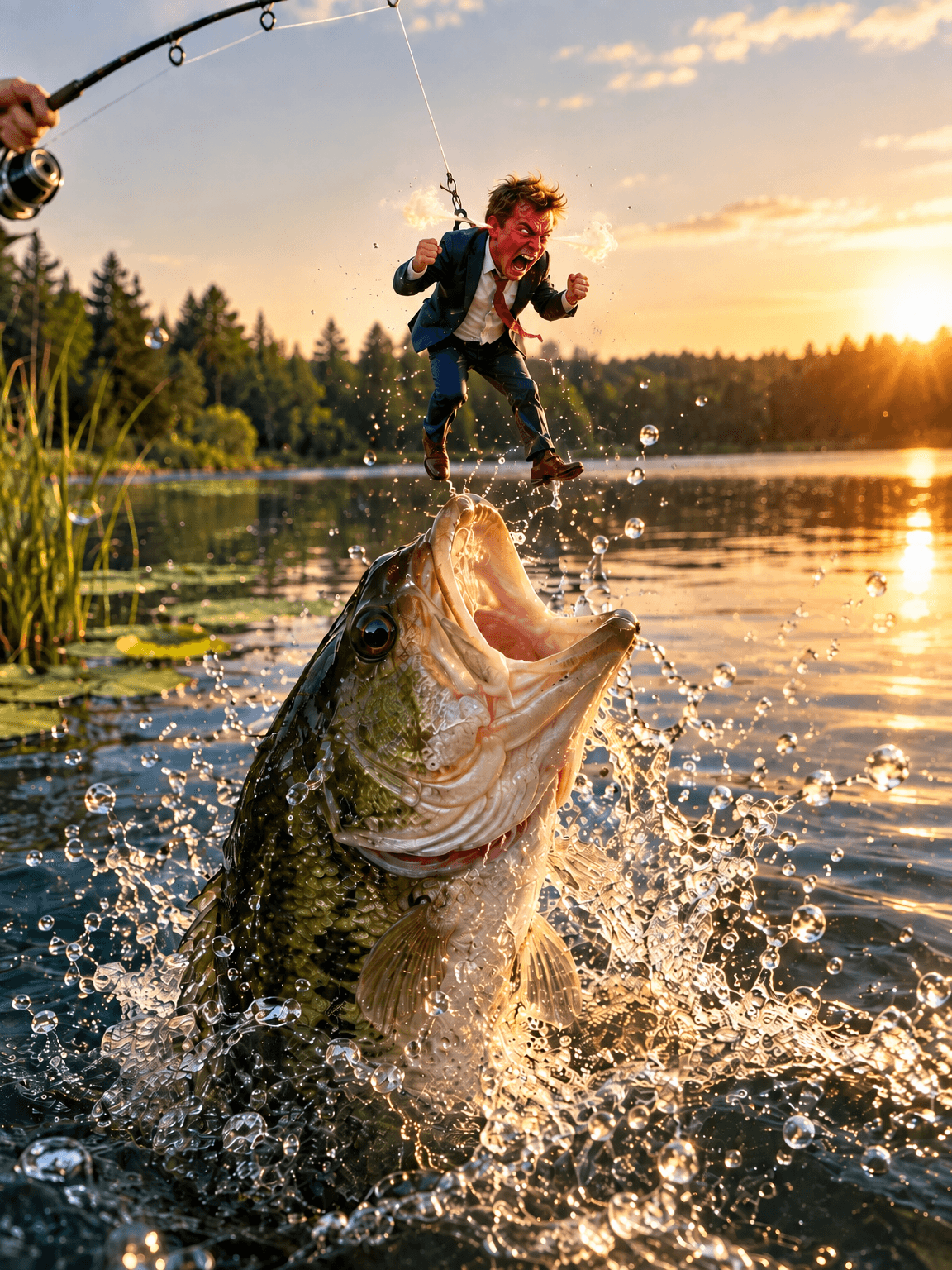
GPT Image 2.5 Flare - fix one thing in an image without losing the rest
Change one detail in an AI image, like size, mood or pose, while the rest of the picture stays put
GPT Image 2.5 Flare · 2 min render
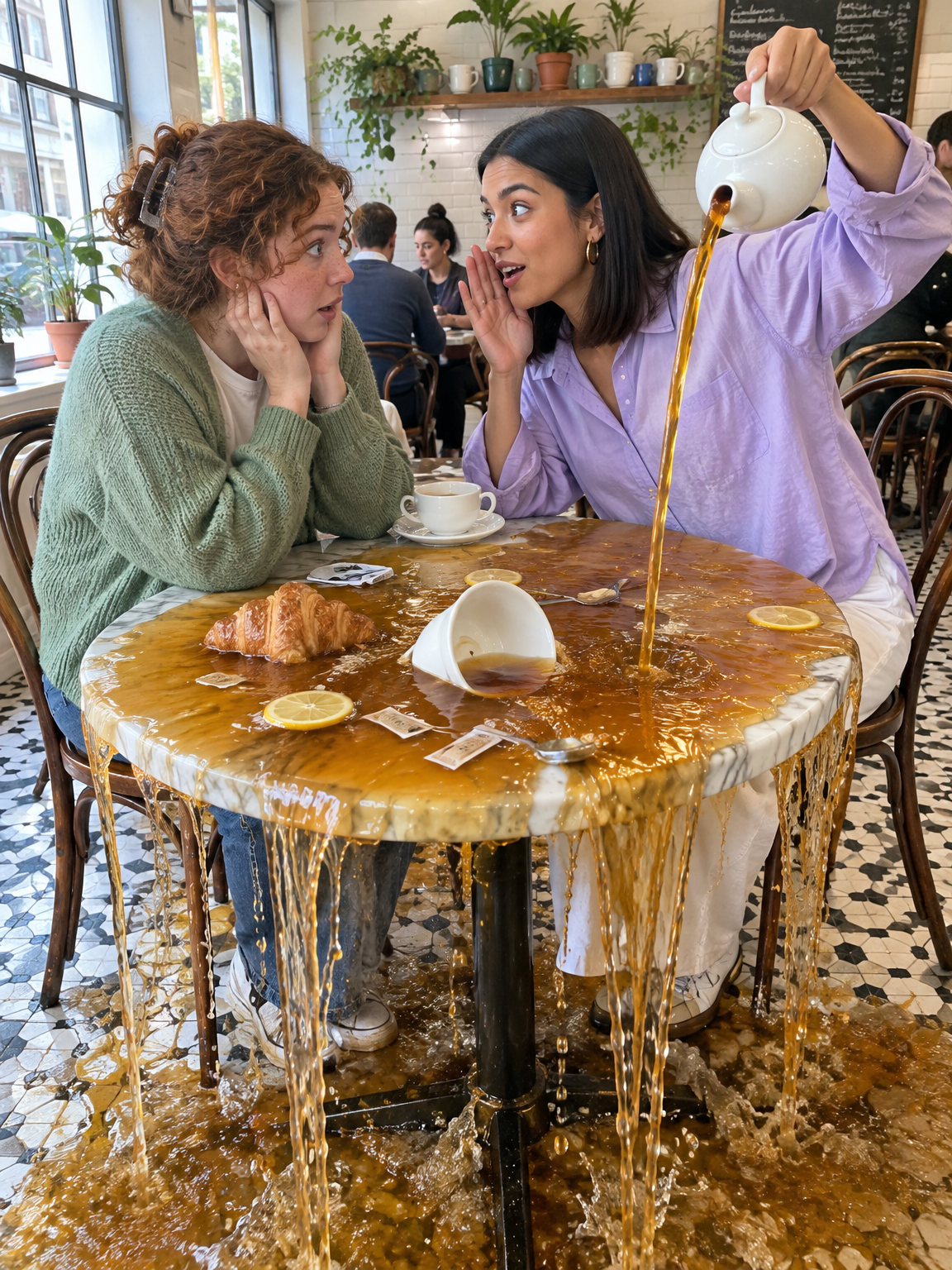
GPT Image 2.5 Flare - Gen Z slang taken literally
Turn slang like spill the tea, glazing and catfished into photos that show the words literally
GPT Image 2.5 Flare · 2 min render
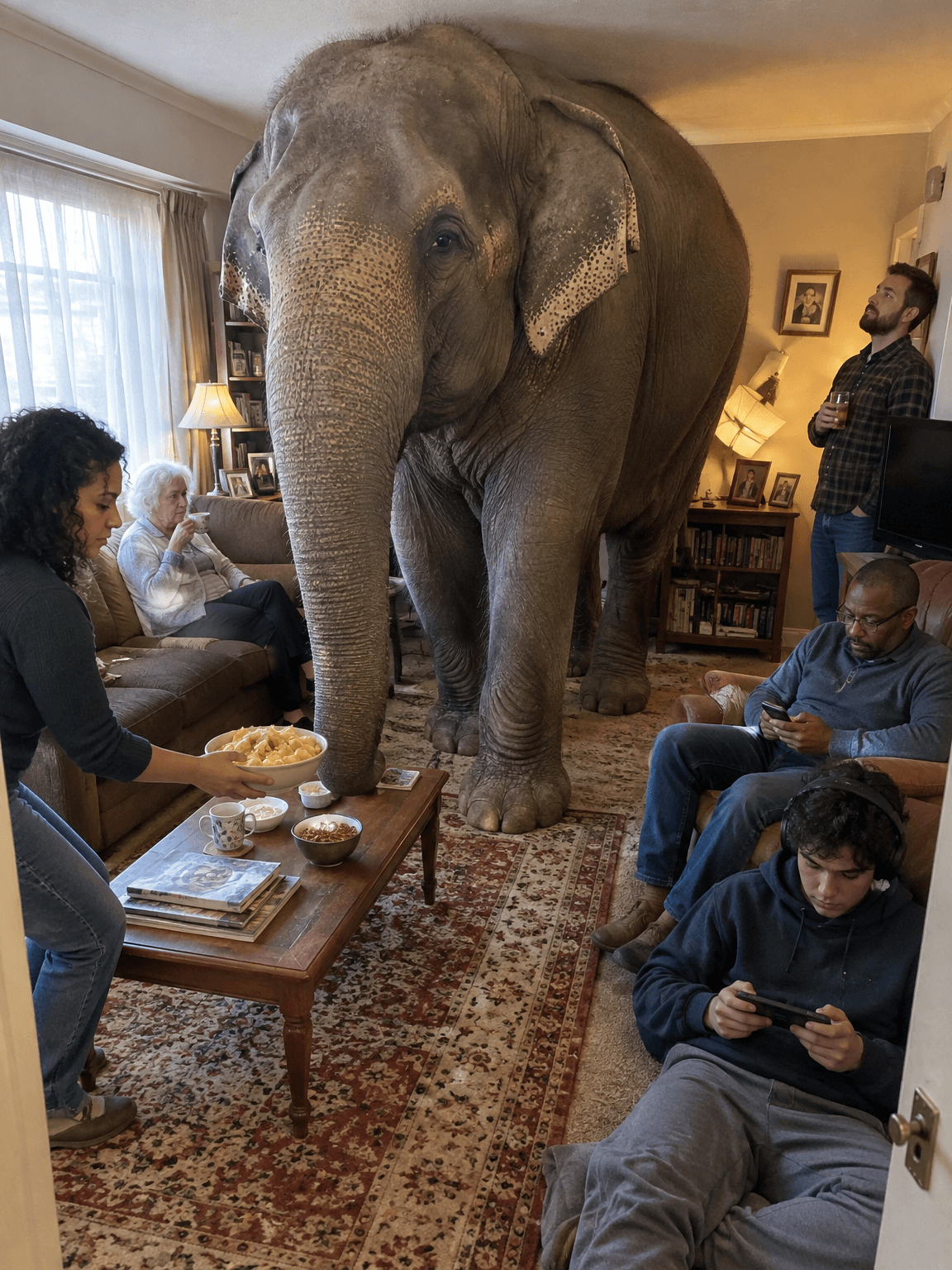
GPT Image 2.5 Flare - old sayings turned into deadpan photos
Turn everyday sayings into realistic photos where one impossible thing happens and nobody reacts
GPT Image 2.5 Flare · 1 min render